Designing for Multigenerational Living Spaces
Multigenerational living is one of the most significant shifts in how Texas families are approaching homeownership. Across Austin, Tarrytown, Westlake, Lakeway, Dripping Springs, and Driftwood, we are working with more clients than ever who are building or remodeling homes to accommodate parents, adult children, and grandchildren under a single roof. The reasons are practical: shared expenses, on-site caregiving, and the kind of closeness that only shared space can offer. But the design challenge is real and worth taking seriously.
A multigenerational home is not simply a larger home. It is a home that has been intentionally designed to serve people at very different life stages, with different mobility needs, different privacy expectations, and different relationships to shared and private space. Getting this right requires planning that goes well beyond adding an extra bedroom. It is a whole-home strategy, and it is one of the most rewarding design problems we encounter in our work.
Why Multigenerational Design Matters Now
The demand for inclusive, family-friendly interiors is not a passing trend. Economic pressures, an aging population, and a cultural shift toward connected family living have together driven multigenerational households to levels not seen in decades. Nearly 26% of Americans now live in households with three or more generations, and that figure continues to rise in markets like Austin where housing costs reward families who pool resources.
For families in the Hill Country and greater Austin area, the multigenerational home also aligns naturally with the way many people in this region already live: outdoors, communally, and with a strong sense of place. Designing spaces that accommodate all ages is not a compromise. Done well, it produces homes that are richer, more flexible, and more deeply personal than homes designed for a single life stage.
The Design Foundation: Privacy Plus Connection
Every successful multigenerational home resolves the same fundamental tension: each generation needs both genuine privacy and genuine connection. A home that leans too far toward shared space becomes stressful. A home that leans too far toward separation loses the warmth that makes multigenerational living worthwhile in the first place.
"The best multigenerational homes are not about compromise. They are about designing spaces that serve each generation fully, then connecting those spaces with intention."
The way we approach this at Wendi Gee Interiors is to begin with a clear map of which spaces will be shared and which will be private. That map then informs every decision that follows, from the floor plan layout to the furnishings selection to the finish choices. If you are planning a custom home build, whether it be Austin, Lakeway or Driftwood, this conversation should happen at the very first design meeting, not as an afterthought once the floor plan is set.
Zoning: How to Organize a Multigenerational Floor Plan
The most effective multigenerational floor plans are built around clear zones. Shared zones bring the family together. Private zones give each generation the autonomy they need. Transitional zones provide the in-between spaces where different generations can interact on their own terms, not by necessity.

Accessibility That Does Not Look Like Accessibility
One of the most important shifts in contemporary multigenerational home design is the move away from clinical accessibility features toward beautiful, universal design. Grab bars that look like architectural hardware. Walk-in showers with no threshold that also look sleek and intentional. Wider hallways that feel generous rather than medical. Lever handles on every door as a design choice, not a concession.The goal is a home that is fully accessible to an aging parent or a family member with mobility needs without announcing that fact to every visitor who walks through the door. This is a design conversation we have regularly with remodeling clients across Austin and Westlake, and the results, when handled with care, are spaces that feel elevated rather than adapted. Explore our remodeling services to learn how we approach accessibility upgrades in existing homes.
Work With Us
Design a Home for Every Generation
Serving Austin, Tarrytown, Westlake, Lakeway, Dripping Springs, and Driftwood.
Designing Shared Living Areas That Work for Everyone
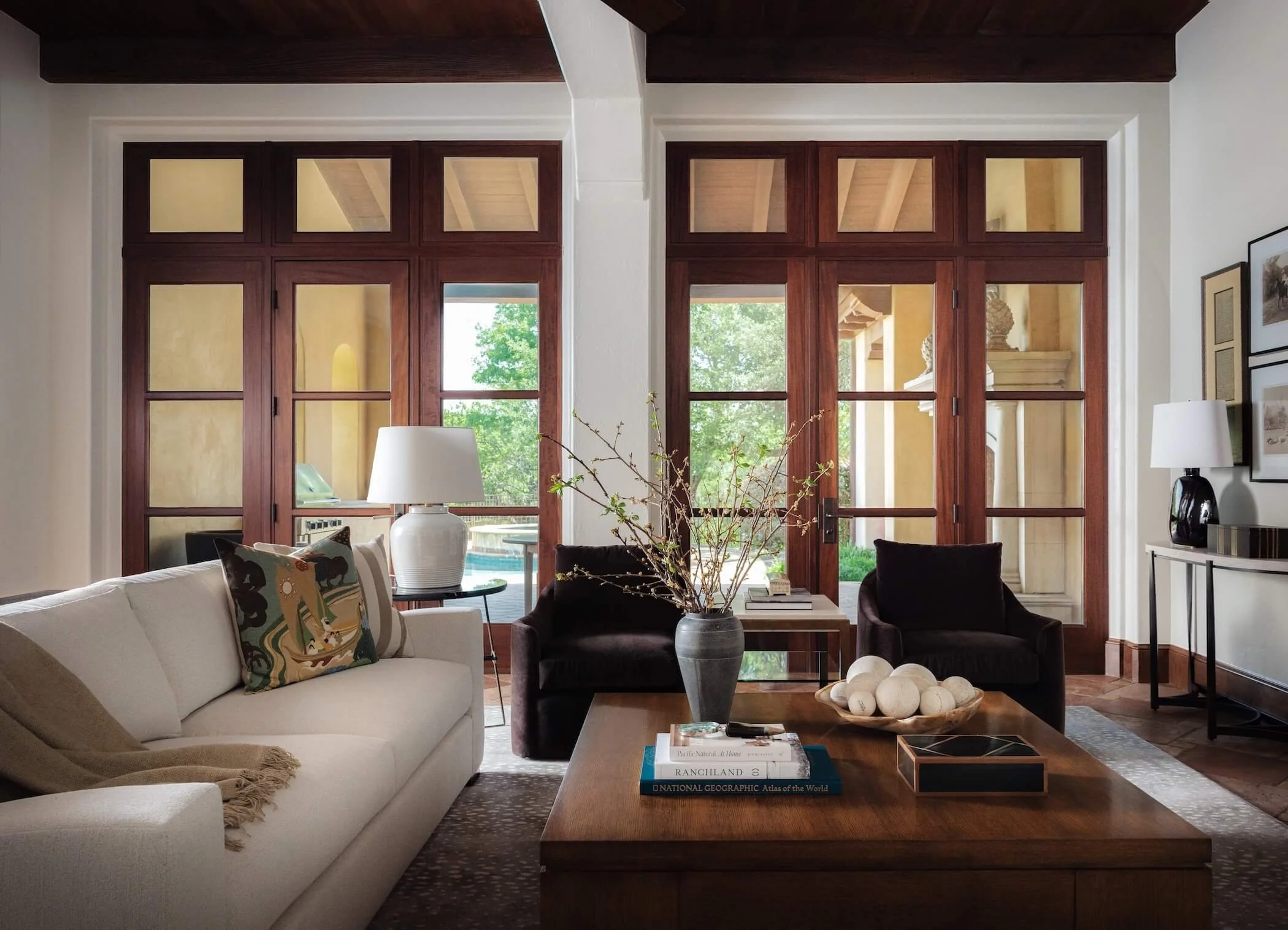
The shared zones of a multigenerational home carry the most design pressure. They need to feel welcoming to a grandparent who prefers calm and a teenager who prefers energy. They need to accommodate both a family dinner and a quiet afternoon. The furniture selection, the acoustic quality, and the flexibility of the layout all matter enormously here. This is where thoughtful furnishings choices make the most difference.Modular seating arrangements are particularly effective. A large sectional can be reconfigured for movie night with grandchildren, a quiet reading afternoon, or a gathering of multiple adults. Performance fabrics that clean easily are a practical necessity when the household includes both young children and elderly family members. And rugs that define zones within an open-plan great room give each generation a visual territory without requiring walls.
In-Law Suites and Private Wings
The in-law suite has evolved considerably in recent years. What was once a converted bedroom with a half bath has become, in the most considered designs, a near-independent living environment within the larger home. A private bedroom, a full bathroom, a sitting area, and a kitchenette give an aging parent the autonomy they need while keeping them close.
When we are working on new custom builds in Lakeway or Driftwood, we encourage clients to plan the in-law suite as a true secondary primary suite rather than as secondary accommodation. This means full-height ceilings, generous natural light, proper closet space, and a bathroom designed with the same care as the primary suite. The suite should feel like a home, not like a guest room.
The Multigenerational Kitchen
The kitchen is where multigenerational living is tested most. Multiple people with different schedules, different cooking habits, and different physical abilities sharing a single kitchen requires both thoughtful planning and, in larger households, sometimes a second kitchen or kitchenette. Homeowners are increasingly prioritizing dual-function kitchens that allow two or more people to use the space comfortably at the same time.
For homes where a full second kitchen is not feasible, the design goal is a main kitchen that accommodates different users simultaneously without conflict. That means an island with seating at different heights, pull-out storage that works for users of varying reach, and good task lighting throughout rather than concentrated over a single prep zone. Wide, clear pathways through the kitchen matter more in a multigenerational home than in a household with a single primary cook.
Outdoor Living as a Shared Generational Space
In the Texas Hill Country, outdoor living spaces are not seasonal amenities. They are year-round rooms, and in a multigenerational home they become some of the most valuable shared spaces in the house. A well-designed covered patio in Driftwood or Dripping Springs can serve as the place where different generations naturally come together without the friction that can develop in shared interior spaces.
Designing these spaces with multiple zones is key. A shaded seating area with comfortable furniture for adults and seniors, a dining area for family meals, and an open lawn or play zone for children gives every generation a reason to be outside at the same time without requiring everyone to occupy the same corner. Accessible pathways from the in-law suite directly to outdoor spaces are one of the details that clients often wish they had prioritized earlier. Our portfolio includes several Hill Country homes where outdoor design has been integral to the multigenerational living strategy from the start.
Remodeling an Existing Home for Multigenerational Living
Not every multigenerational design begins with a blank lot. Many of the projects we take on involve adapting an existing home in Tarrytown or Westlake to accommodate a new generation moving in. The design priorities in these projects are different from a new build because the structural constraints are real and the budget must be deployed strategically.
The highest-impact remodeling investments for multigenerational living are typically: converting an underused room into a proper suite with an en suite bathroom; widening key doorways and eliminating threshold steps at entries; upgrading the main bathroom to a curbless design with universal features; and improving acoustic separation between sleeping areas. Our remodeling team has extensive experience working through this prioritization with clients, and the results consistently outperform expectations when the design strategy is clear from the start.