Walk into any room that feels truly designed and you will notice something almost instantly: your eye knows exactly where to go. It lands somewhere specific, lingers there, and then moves outward to take in the rest of the space. That landing point is the focal point, and it is one of the most fundamental principles in interior design. It is also one of the most consistently underestimated, particularly in homes where every element has been carefully chosen but nothing has been given permission to lead.
At Wendi Gee Interiors, the focal point conversation is one we begin early with clients across Austin, Tarrytown, Westlake, Lakeway, Dripping Springs, and Driftwood. Before furniture is selected, before a color palette is committed to, and before a single piece of art is hung, we want to know: what is this room going to draw attention to? The answer to that question shapes every decision that follows.
What Is a Focal Point and Why Does It Matter
A focal point is the dominant element in a room that immediately captures attention when you enter. It provides visual hierarchy, giving the eye a clear starting point and the room a sense of order. Without a focal point, a space can feel scattered, as though every element is competing for attention and none is winning. With a strong focal point, even a modestly furnished room can feel resolved, intentional, and complete.
"Think of every room like a photograph. A great image has one clear subject. The rest of the frame exists to support and elevate it. Rooms work exactly the same way."
Focal points serve three distinct functions in a well-designed space. They create visual interest by giving the eye something purposeful to engage with. They establish balance by providing a dominant anchor that everything else can relate to. And they guide movement, drawing people through a space and giving them a reason to stop, sit, or gather in a particular place. Understanding these three functions is the key to making focal point decisions that go beyond the obvious.
Natural Versus Created Focal Points
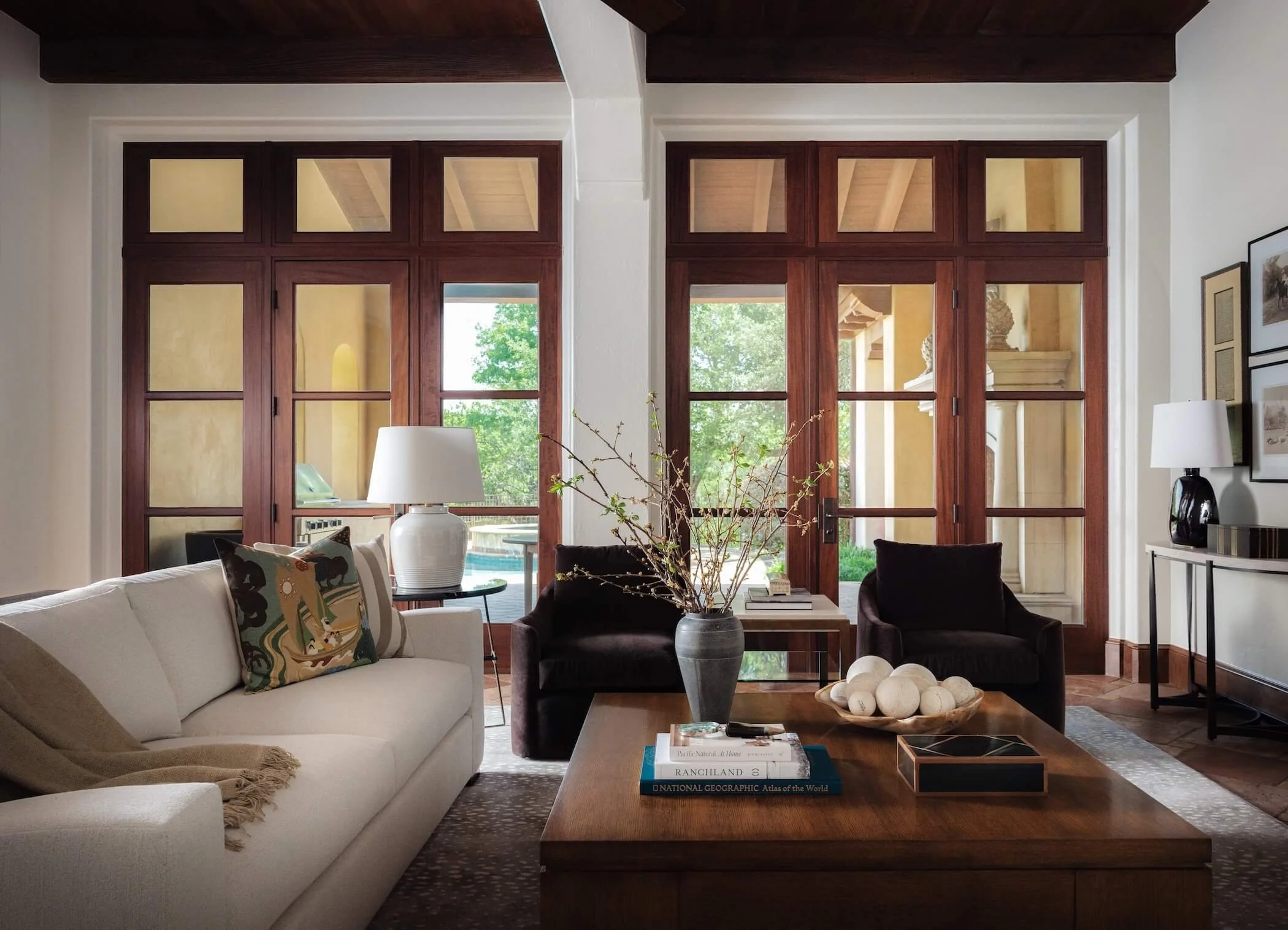
Some rooms arrive with their focal point already built in. A fireplace, a floor-to-ceiling window with a Hill Country view, a vaulted ceiling, an exposed beam, or a dramatic architectural archway will naturally draw the eye and become the room's visual anchor whether you plan for it or not. In these rooms, the design challenge is not to create a focal point but to frame and enhance the one that already exists.
Other rooms arrive with no obvious dominant feature. A square room with standard ceiling heights, no architectural character, and four identical walls gives you complete freedom and complete responsibility. In these spaces, the focal point must be created deliberately through furniture, art, lighting, color, or texture. This is where intentional design decisions make the greatest difference, and where the guidance of an experienced furnishings team is most valuable.

Focal Points Room by Room
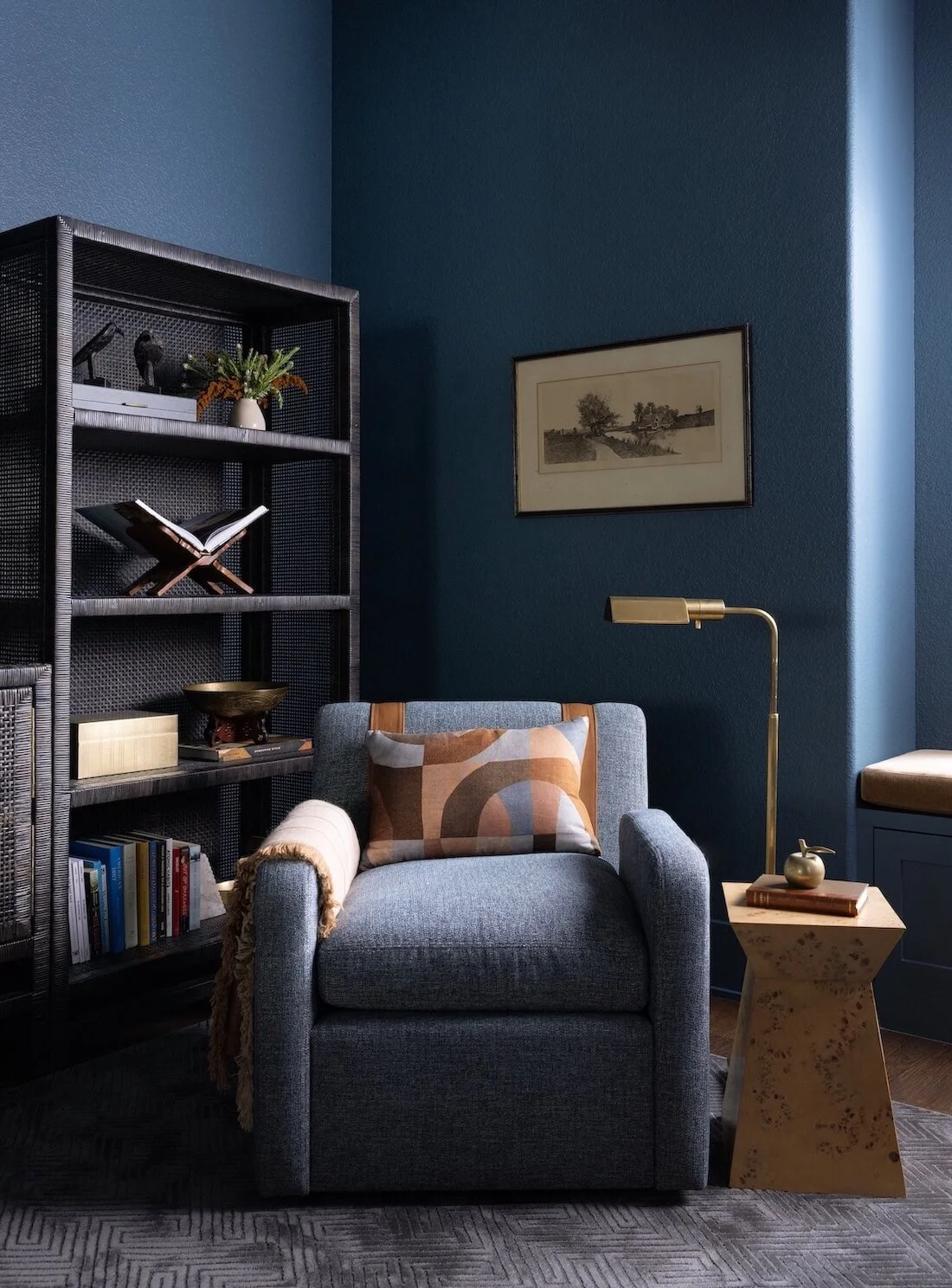
The right focal point for a room depends on how that room is used, how it is entered, and what emotional tone it should set. A bedroom focal point should feel restful and grounding. A living room focal point should invite gathering and conversation. A dining room focal point should elevate the experience of the table. The function of the room is always the starting point for the focal point decision.
How Lighting Draws Attention to Key Areas
Lighting is one of the most powerful and most underused tools for enhancing a focal point. The eye is instinctively drawn to areas of contrast, and the clearest contrast in any room is the meeting point of light and shadow. By directing light toward a focal point and allowing the surrounding area to remain relatively darker, you intensify the dominance of that feature without changing anything about the room's architecture or furnishings.
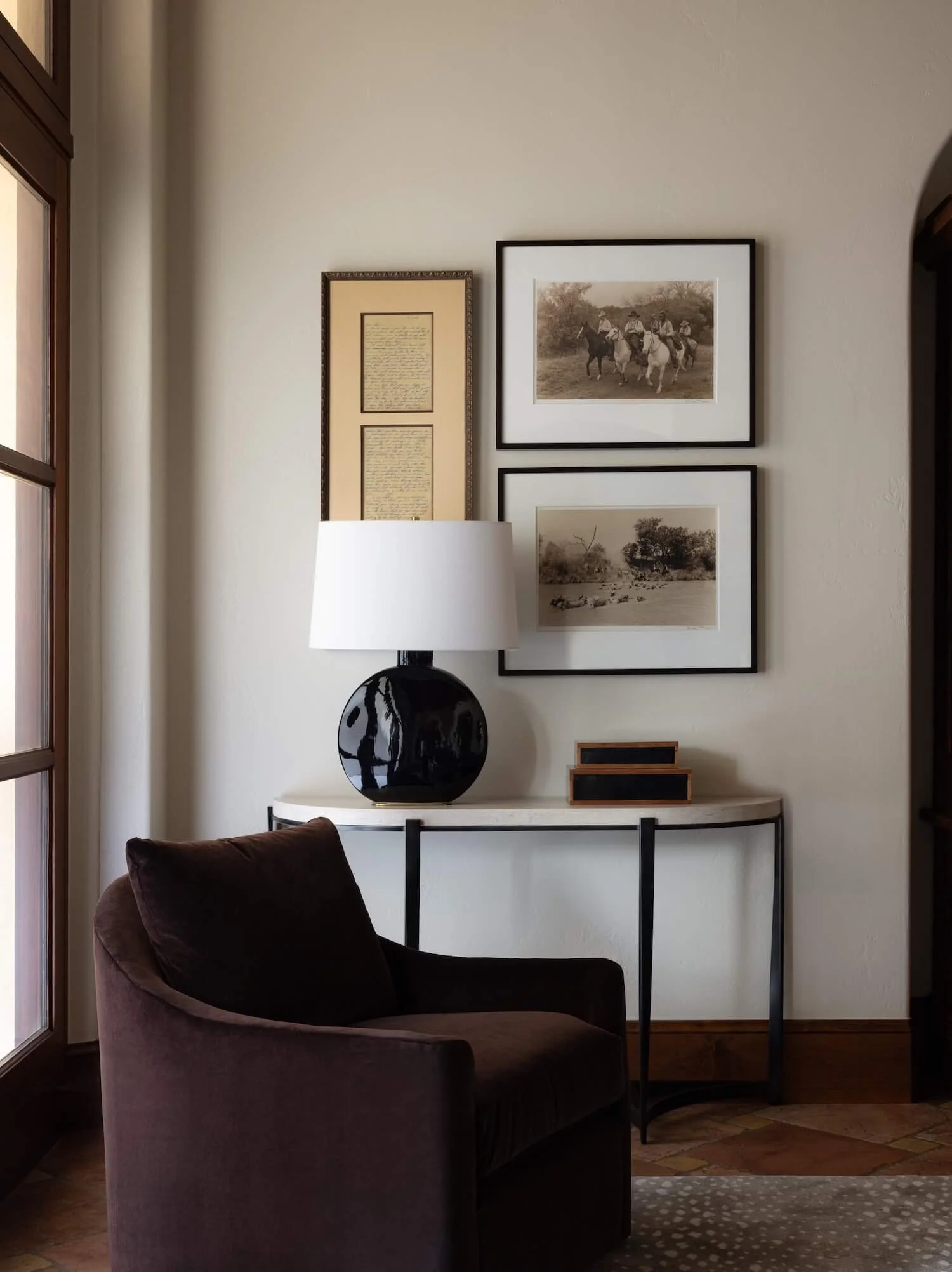
Picture lights and track lighting draw attention to art. Pendant lights above a dining table or kitchen island connect the fixture to the feature below it, creating a vertical focal axis. Uplights at the base of an architectural element draw the eye upward, adding drama and height. And a statement chandelier in the right position becomes a focal point in its own right, serving the room even before a single piece of furniture is placed. Lighting decisions made during a remodeling project can transform how a room reads without changing its footprint at all.
Scale, Proportion, and Visual Weight
A focal point only works if it has sufficient visual weight to lead the room. This is where scale becomes critical. Art that is too small for its wall, a light fixture that is too delicate for its space, or a headboard that does not fill the wall above the bed will read as decorative accents rather than dominant features. The focal point must be large enough, bold enough, or distinctive enough to hold its position as the room's visual leader.
Visual weight does not always mean physical size. A deep, saturated color on an accent wall has enormous visual weight in a room of neutrals. A single large-scale sculpture in a room of low furniture commands attention through contrast of scale. A mirror that reaches from console to ceiling claims visual leadership through height rather than mass. The principle is always the same: the focal point must be more visually compelling than anything else in the room, by a margin that is clear and confident. Our furnishings team considers scale and proportion in every project we take on across Austin and the surrounding area.
Not Sure Where Your Room's Focal Point Should Be?
We help clients across Austin, Tarrytown, Westlake, Lakeway, Dripping Springs, and Driftwood identify and create focal points that give every room a clear sense of intention and beauty.
Using Color and Texture to Enhance Design
Color and texture are two of the most accessible tools for creating or amplifying a focal point, particularly in existing homes where structural changes are not on the table. An accent wall in a saturated, warm tone draws the eye immediately and anchors the room in a way that paint on all four walls never could. Statement wallpaper on a single wall creates pattern, texture, and depth simultaneously, establishing a focal point through design rather than architecture.
Texture works in a similar way. An exposed brick wall in a room of smooth plaster finishes draws the eye through contrast of material. A heavily textured plaster finish behind a bed creates depth and warmth that a painted wall cannot match. A richly patterned rug on a light floor anchors the seating arrangement below it and gives the eye a reason to settle. These are all tools that remain fully available during a remodel or even through thoughtful furnishings and styling choices alone.
Managing Multiple Focal Points
Most rooms benefit from one primary focal point and one or two secondary supporting features. The primary focal point leads the room. Secondary features give the eye somewhere to travel after it has settled on the dominant element. This layering creates visual richness without confusion, as long as the hierarchy between primary and secondary is clear.
The most common focal point mistake we see in homes across the Austin area is the absence of hierarchy. When a fireplace, a large television, a gallery wall, and a statement rug all compete for dominance in the same room, the result is visual noise rather than visual interest. Resolving the hierarchy is usually the single highest-impact change we can make in a space, and it often requires moving very little and rethinking quite a lot.
Focal Points in Custom Home Builds
When designing a custom home in Lakeway, Driftwood, or anywhere in the greater Austin area, the focal point conversation begins at the architectural level. Window placement, ceiling height variations, fireplace positioning, and the orientation of rooms relative to Hill Country views are all focal point decisions before a single piece of furniture is considered. Getting these decisions right at the design phase means the architecture and the interiors work together from the very beginning.The homes we design that feel most resolved are always the ones where the focal points were identified and planned for early. A great room oriented toward a west-facing Hill Country sunset in Dripping Springs needs no additional focal point intervention. The view does the work. A primary bedroom with a vaulted ceiling and a dramatic window above the bed line creates a focal point that no piece of art could replicate. Architecture, when designed with this intention, is the most powerful focal point tool available. We invite you to explore our portfolio to see how focal point thinking shapes our custom builds from the ground up.
Work With Us
Design Spaces That Draw the Eye
Serving Austin, Tarrytown, Westlake, Lakeway, Dripping Springs, and Driftwood.