Understanding the Rule of 3 in Interior Design for Austin Homes
Some design principles are abstract and context-dependent. The rule of 3 is neither. It is one of the most practical, immediately applicable tools in interior design, and once you understand it, you will see it everywhere, in the way objects are grouped on a shelf, the way colors are layered in a room, and the way furniture is arranged to create balance and visual interest.
At Wendi Gee Interiors, the rule of 3 is something we apply instinctively across every project, whether we are working on a custom new build in the Hill Country, a full home remodel in Central Austin, or a furnishings project across Westlake or Tarrytown. Here is everything you need to know to apply it confidently in your own Austin home.
What Is the Rule of 3 in Interior Design?
The rule of 3 is a design principle drawn from visual psychology. It states that the human eye finds groups of three more natural, balanced, and engaging than groups of two or four. Two objects feel static and symmetrical. Four objects feel even and heavy. Three objects create movement because the eye has to travel between points that do not form a perfect mirror image, which makes the composition feel dynamic and alive.
This principle appears across art, photography, architecture, and writing as well as interior design. In Austin interior design specifically, it underpins almost every decision we make about how to group objects, layer colors, arrange furniture, and build a lighting palette across a room.
Understanding the rule of 3 is not about following a formula. It is about training your eye to recognize the difference between a composition that has rhythm and one that feels flat or unresolved, and knowing how to fix it.
The Rule of 3 in Object Grouping
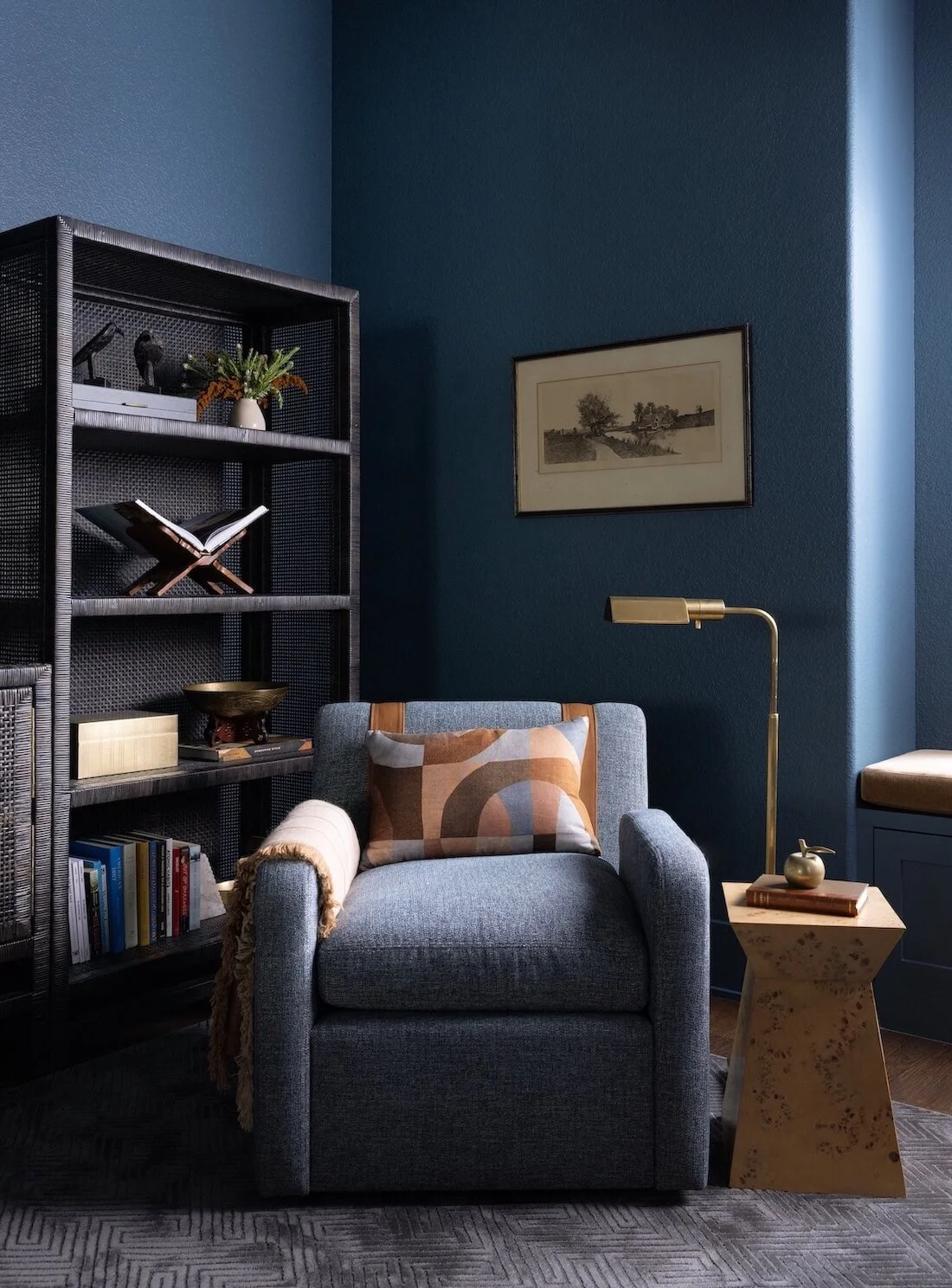
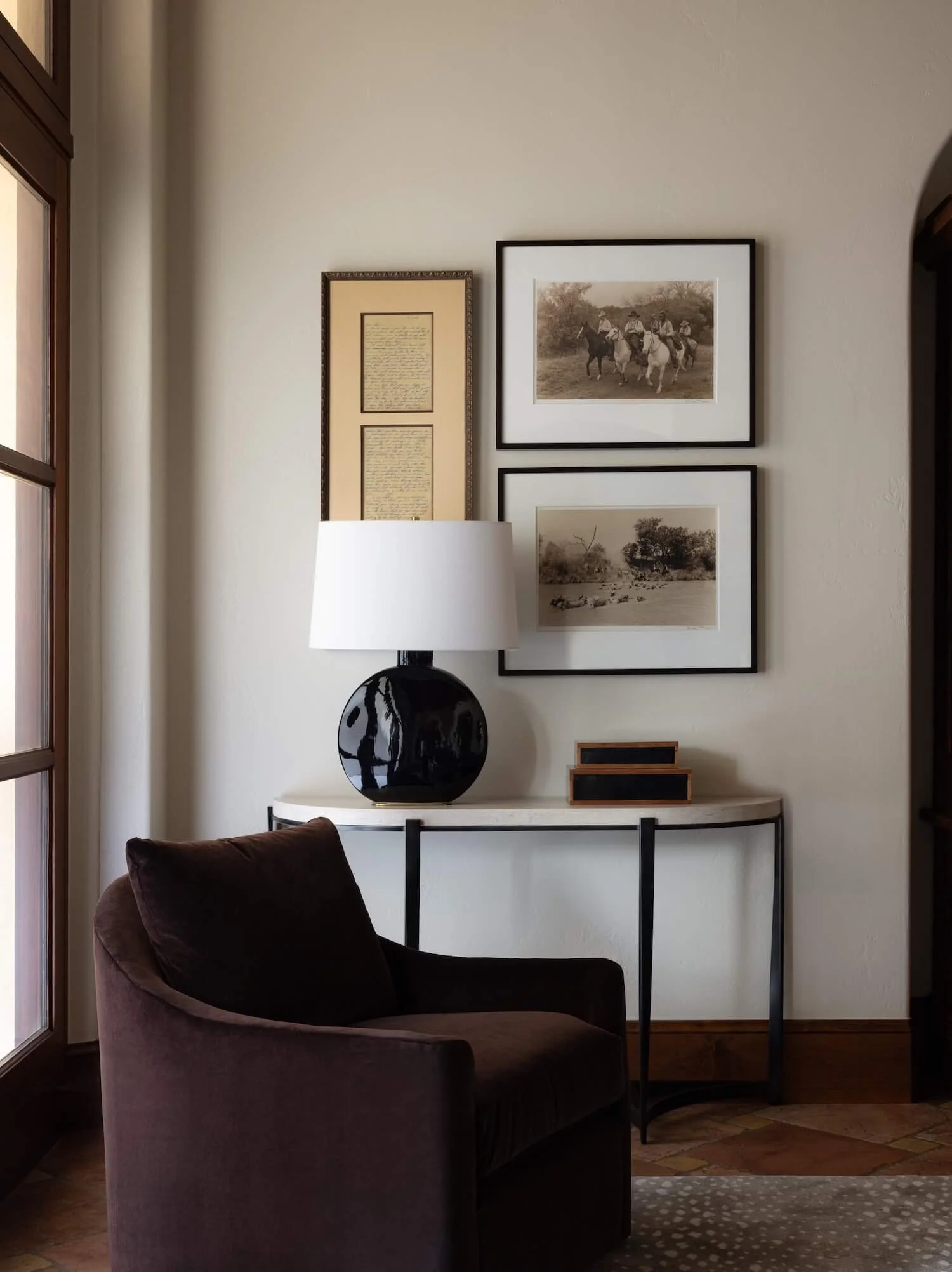
The most visible application of the rule of 3 in interior design is in how objects are grouped on surfaces: shelves, coffee tables, console tables, mantels, and bedside tables. When you arrange three objects together, the composition has a natural hierarchy. One object is typically taller or larger and anchors the group. One is medium. One is smaller and provides contrast. The eye moves between the three in a triangular path and keeps moving, which is what creates the sense of visual interest.
In practice this means grouping a tall vase, a medium stack of books, and a smaller decorative object on a side table rather than two candlesticks of equal height. Or placing three different-sized vessels on a kitchen shelf rather than a symmetrical pair. The variation in height, scale, and texture is what makes the composition feel considered rather than placed.
For furnishings projects we work on across Dripping Springs and Driftwood, this principle guides every styling decision on every surface in the home. It is deceptively simple and extraordinarily effective.
The Rule of 3 in Color
The color version of the rule of 3 is known as the 60-30-10 rule and it is one of the most useful tools in any designer's palette decision-making. The principle is straightforward: choose three colors for a room. The dominant color covers approximately 60 percent of the space, typically the walls and large furniture pieces. The secondary color covers 30 percent, typically upholstery, rugs, and curtains. The accent color covers the remaining 10 percent in cushions, artwork, and decorative objects.
In Austin interior design in 2026, a typical 60-30-10 palette might be warm clay on the walls (dominant), a warm linen sofa and natural jute rug (secondary), and aged brass hardware and deep terracotta cushions (accent). The three tones work together because they share a warm undertone, but the variation in depth and saturation across the three keeps the room from feeling flat.
The 60-30-10 rule also prevents the most common color mistake in residential interiors, which is using too many colors without a clear hierarchy. When every color competes equally for attention, no color wins and the room feels chaotic. Three colors in clear proportions creates a room that feels complete.
The Rule of 3 in Furniture Arrangement
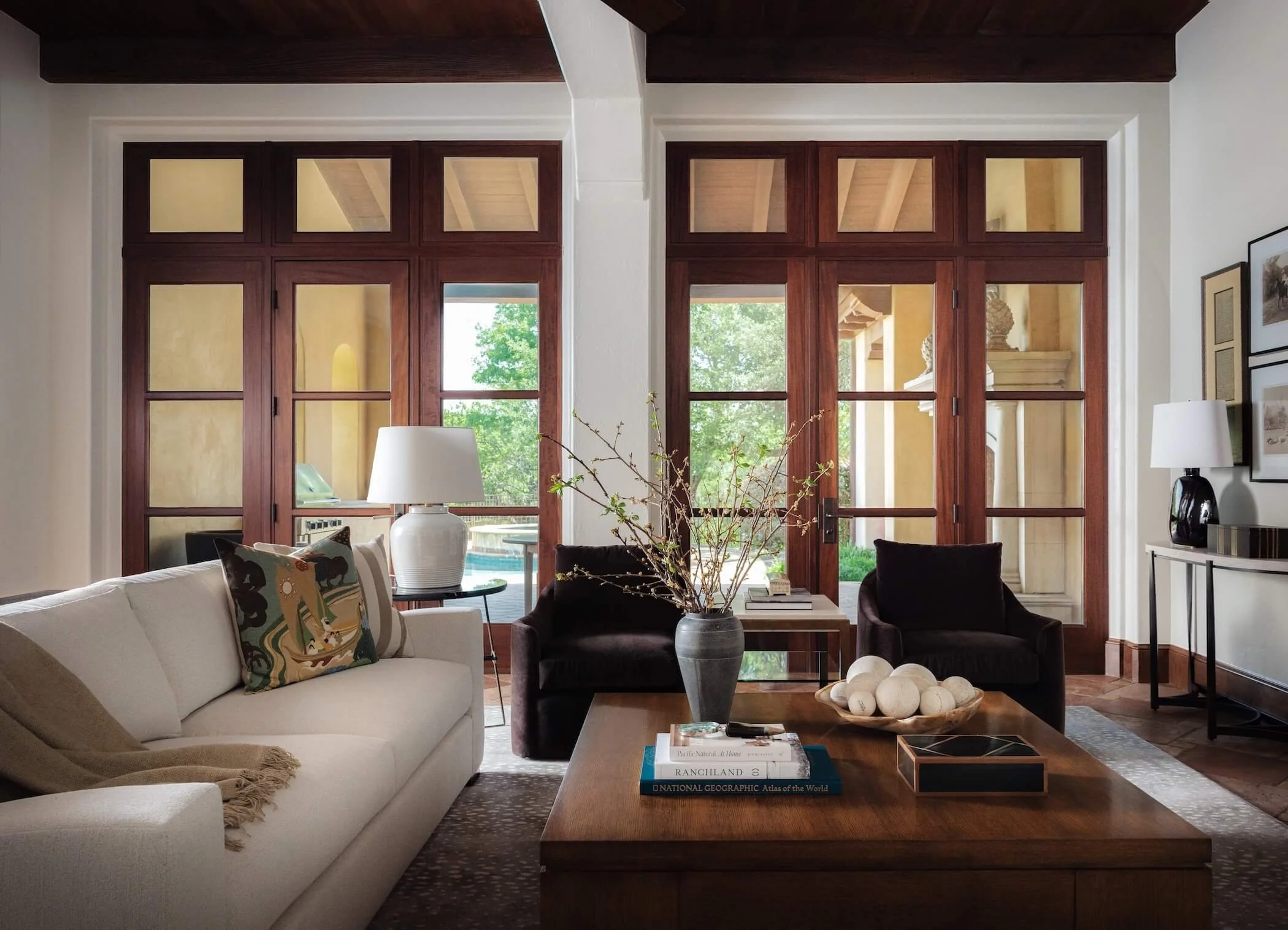
The rule of 3 applies to furniture arrangement in a more structural way. In a living room, the most successful seating arrangements typically involve three distinct seating elements: a main sofa, a secondary sofa or pair of chairs, and a single accent chair. This creates a triangular layout that encourages conversation and allows the eye to move around the room naturally.
In Austin home remodels where open-plan living areas are common, the rule of 3 also applies to how the overall space is zoned. Three distinct zones within an open-plan layout, typically a living zone, a dining zone, and a transitional zone like a reading corner or bar, give the space structure and purpose without requiring walls.
For custom Texas builds where the floor plan is being designed from scratch, we use this principle at the architectural level to ensure that every large room has three distinct areas of focus rather than a single undifferentiated space.
The Rule of 3 in Texture and Material
Texture is where the rule of 3 becomes truly powerful in the kind of transitional interior design that defines Wendi Gee Interiors' work. Three distinct textures in a room, typically one smooth, one woven or tactile, and one rough or organic, create the layered, collected quality that separates a designed room from a furnished one.
In a Westlake living room, that might be a smooth plaster wall, a linen sofa, and a reclaimed wood coffee table. In a Tarrytown bedroom, it might be silk curtains, a textured bouclé headboard, and a natural jute rug. In each case, three textures in clear relationship to each other create depth and visual richness without overwhelming the senses.
The Rule of 3 in Lighting
A well-lit room always has three types of light: ambient light that fills the room, task lighting that serves a specific function, and accent lighting that creates atmosphere and draws attention to architectural or decorative features. This three-layer approach to lighting is the single most impactful change most Austin homeowners can make to improve how their rooms feel in the evening.
Many homes in Lakeway and Dripping Springs rely almost entirely on recessed downlights for ambient light, which creates a flat, evenly lit room with no atmosphere. Adding a floor lamp for warmth and a picture light or sconce for accent transforms the same room into something layered and inviting without changing a single piece of furniture.
Applying the Rule of 3 in Your Austin Home
The rule of 3 is one of those design principles that becomes more useful the more you apply it, because it trains your eye to see imbalance quickly and correct it confidently. Once you understand why a shelf feels off or a room feels flat, you can fix it without guessing.
The homes we are most proud of across Westlake, Tarrytown, Dripping Springs, Driftwood, and Lakeway are the ones where every element from the furniture layout to the object groupings to the lighting palette follows this rhythm naturally. The rule of 3 is not visible in those rooms. The rooms just feel right, and that is exactly the point.
If you are planning a remodel, a new build, or a furnishings refresh, we would love to help you build spaces that feel this considered from the ground up.
Ready to bring the rule of 3 to life in your Austin home? Schedule a free discovery call with Wendi Gee Interiors today.