Choosing the Right Lighting Fixtures for Your Home
Of all the decisions that shape how a home feels, lighting is among the most powerful and the most misunderstood. Clients across Austin, Tarrytown, Westlake, Lakeway, Dripping Springs, and Driftwood often arrive having invested deeply in beautiful furnishings, considered finishes, and carefully chosen art, only to find that the room still does not feel quite right. More often than not, the missing element is lighting. The fixtures are either too few, too flat, too small, or misaligned with the room's function and the ambiance it should create.
Selecting lighting fixtures is not simply a matter of choosing something that looks attractive in a showroom. It is a layered design decision that touches on scale, finish, function, light quality, and the way a fixture interacts with every other element in the room. At Wendi Gee Interiors, lighting is one of the first conversations we have on any project, whether we are working on a custom home build in Lakeway or a remodel in Tarrytown. Getting it right from the start changes everything about how the finished space reads.
The Three Layers of Light Every Room Needs
Before selecting a single fixture, it helps to understand that well-lit rooms are never the product of one light source. They are built from three distinct layers, each serving a different purpose and each requiring its own fixtures. A room that relies on a single overhead source, no matter how beautiful the fixture, will always feel flat. A room that layers all three will feel warm, resolved, and deeply considered.
Scale and Proportion: The Most Common Mistake
The single most common lighting mistake we see in homes across the Austin area is undersized fixtures. A pendant that is too small above a kitchen island, a chandelier that disappears in a double-height entry, a bedside sconce that sits too low on the wall: these are not subtle errors. They read immediately, and they undermine everything else in the room. Scale is not optional in lighting. It is fundamental.
"A lighting fixture that is too small for its space does not just look wrong. It communicates that the room was not fully thought through. Scale is the difference between a fixture that commands the room and one that decorates it."
A practical starting point for chandeliers: add the room's length and width in feet, and convert that number to inches. That gives you a reliable starting diameter for a chandelier in that room. For pendants over a dining table, look for a diameter between half and two thirds the width of the table. For pendants over a kitchen island, allow roughly 30 to 36 inches of clearance between the bottom of the fixture and the countertop. These are the proportional frameworks our furnishings team works from on every project.
Fixture Types and Where They Belong
Understanding the vocabulary of lighting fixtures makes the selection process significantly clearer. Each type has a primary use case and a set of considerations that determine whether it is the right choice for a given space.
Choosing a Finish That Works With Your Interior
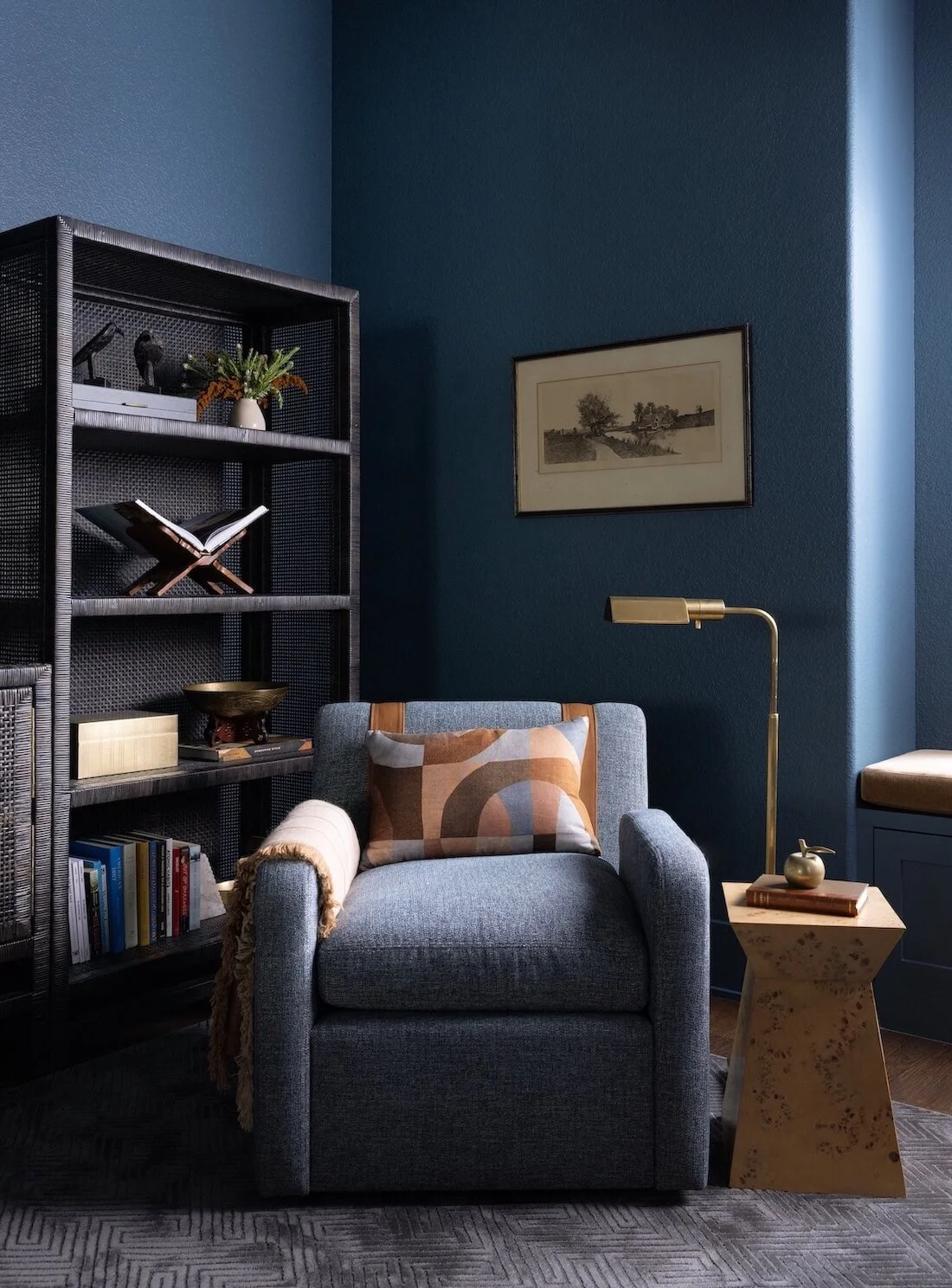
Fixture finish is where lighting decisions intersect directly with the broader material palette of a home. The finish on a light fixture should feel like a deliberate part of the room's material story, not an afterthought. In the Hill Country homes we design across Driftwood and Dripping Springs, warm bronze and unlacquered brass work naturally alongside natural stone, warm wood tones, and plaster walls. In the more contemporary homes we work on in Westlake and Tarrytown, gunmetal and bronze often provide the right visual note.
One important detail that is easy to overlook: within any given finish, the sheen matters enormously. Polished nickel and brushed nickel are both nickel, but mixing them reads as an error rather than a choice. Polished nickel also carries a warm undertone while chrome carries a cool one, and the two do not mix well even though they look similar in photographs. When coordinating fixtures across a home, consistency of sheen within a chosen finish is as important as the finish itself.
Creating Ambiance Through Light Quality
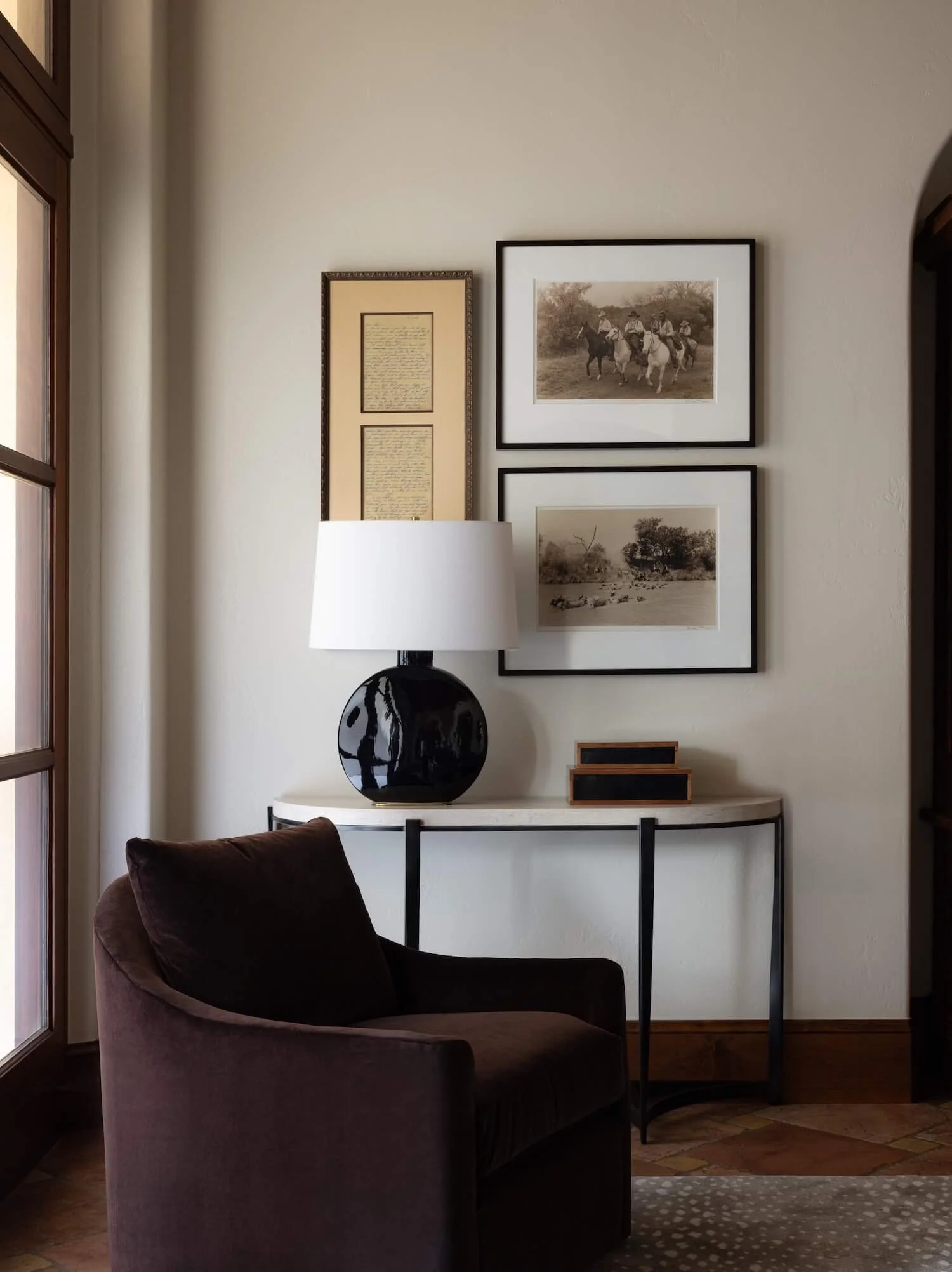
The fixture is only half of the lighting equation. The quality of light that fixture produces, its color temperature, its brightness, and whether it is dimmable, determines the ambiance of the room as much as the fixture design itself. A beautiful chandelier filled with cool, bright bulbs in a warm, intimate dining room will undercut everything the room is trying to achieve. The reverse is equally true.
For most living spaces, a color temperature of around 2700K produces the warm, golden light that feels inviting and flattering. Kitchens and bathrooms where task performance matters can move slightly cooler, toward 3000K, without losing warmth. Anything above 3000K reads as clinical in a residential setting and should be reserved for utility spaces. Dimmers are one of the highest-value investments in any lighting plan. They cost very little relative to the fixtures themselves, and they give every room the ability to shift from full working brightness to intimate evening ambiance with a single adjustment. In a remodeling project, adding dimmer switches is one of the first things we recommend.
Room by Room: Selecting Fixtures with Intention
The right fixture for any room depends on the room's function, its scale, the quality of its natural light, and the ambiance it is meant to create. Lighting decisions made without reference to these factors tend to produce rooms that are either over-lit, under-lit, or simply flat.
Ready to Illuminate Your Home Properly?
We help clients across Austin, Tarrytown, Westlake, Lakeway, Dripping Springs, and Driftwood develop lighting plans that enhance every space and create the ambiance their home deserves.
Mixing Fixtures Without Creating Chaos
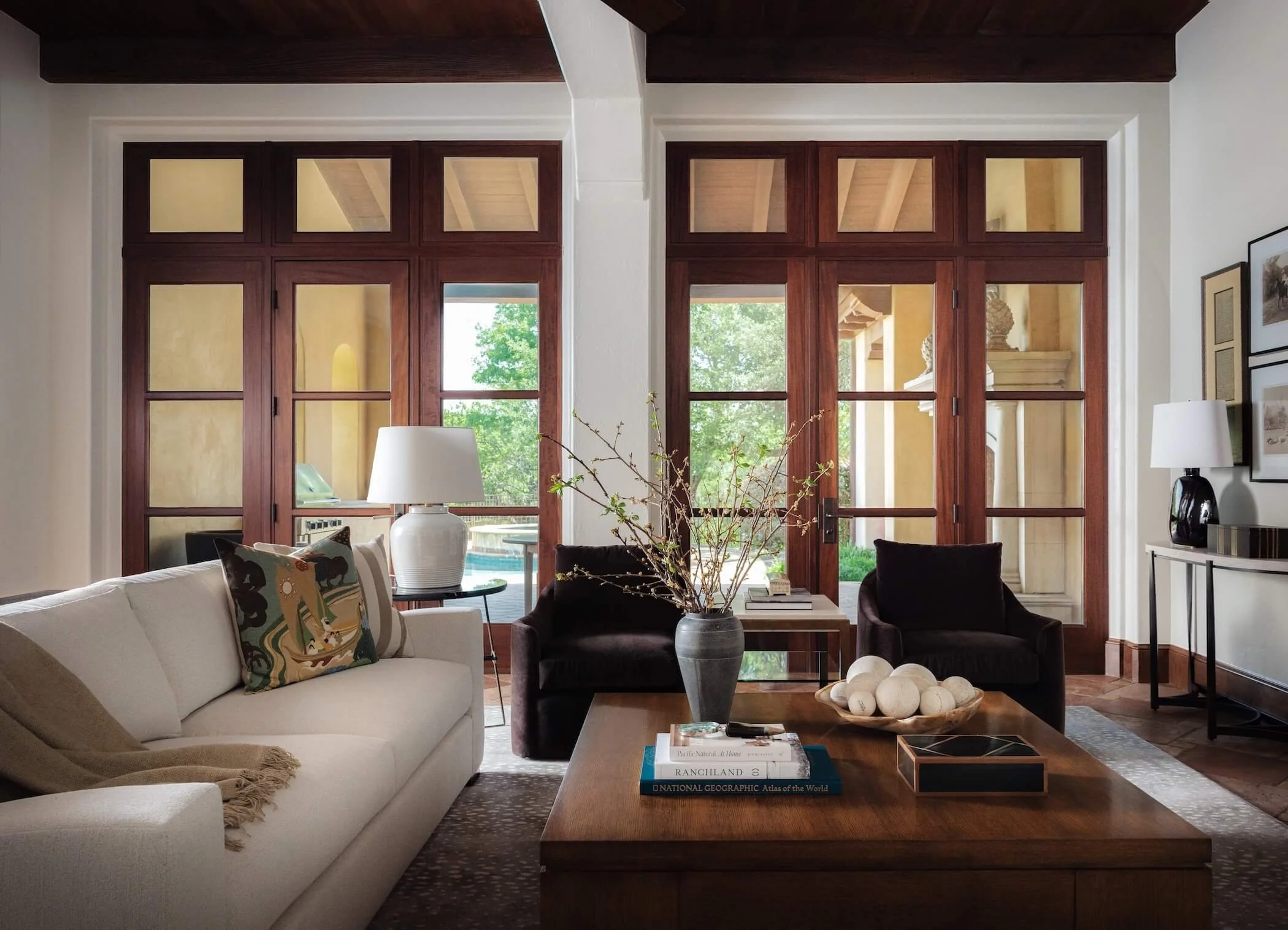
Matching every fixture in a home creates a flat, showroom quality that lacks the layered richness of a truly designed interior. But mixing without a unifying principle creates visual noise. The answer is intentional variety: choose a thread that runs through every room, whether that is a finish family, a material, a shape language, or a combination of these, and allow the individual fixtures to vary within that framework.
For example, a home might use warm brass as its consistent finish thread while varying the fixture forms: a sculptural chandelier in the dining room, simple dome pendants over the kitchen island, and paired wall sconces in the primary bedroom. The finish connects them. The forms give each room its own identity. This is the approach our furnishings team takes when developing a whole-home lighting plan, and it produces results that feel both cohesive and genuinely considered.
Lighting in Custom Home Builds
In a custom home build, the lighting conversation begins at the architectural level. Ceiling height, the placement of beams and soffits, window orientation relative to natural light, and the electrical plan are all lighting decisions before a single fixture is chosen. A well-planned electrical layout gives every room the flexibility to place fixtures exactly where the design requires rather than where the builder defaulted to. This matters enormously in the Hill Country homes we design across Lakeway, Driftwood, and Dripping Springs, where the architecture itself is often the most compelling design element and the lighting plan needs to honor and amplify it.
We encourage clients building custom homes to treat the lighting plan as a design document, not a contractor checklist. The locations of recessed cans, the placement of junction boxes for pendants, the routing of dimmer circuits, and the specification of exterior lighting that connects the interior experience to the landscape outside: all of these decisions made thoughtfully at the design phase produce a home that glows with intention. Explore our portfolio to see how lighting shapes the character of the custom homes we have completed across the Austin area.