Natural light changes everything. It makes rooms feel larger, colors look more accurate, and spaces feel more welcoming. Whether you are building a custom home or refreshing an existing space, knowing how to maximize natural light is one of the highest-impact design decisions you can make.
This guide covers the most effective natural light tips for homeowners in the Austin area, including Lakeway, Driftwood, and Tarrytown, where open land and strong Texas sun create real opportunity for bright home design.
Start With Your Windows
Windows are your primary source of natural light, so their size, placement, and orientation matter enormously. South-facing windows receive consistent light throughout the day and are ideal for living rooms and kitchens. East-facing windows bring in energizing morning light, making them a great choice for bedrooms. West-facing rooms glow in the afternoon and evening.
If your home feels darker than it should, consider whether your windows are undersized for the room. During a custom home build or renovation, enlarging windows or adding clerestory windows high on the wall is one of the most effective investments you can make for sunlight optimization. Clerestory windows are especially useful because they bring in light without sacrificing wall space or privacy below.
Skylights are another powerful option, particularly in rooms that lack exterior walls, such as hallways and interior bathrooms. A well-placed skylight can illuminate an entire corridor and reduce your reliance on artificial lighting throughout the day.
Use Reflective Surfaces to Spread Light
Once light enters your home, your goal is to help it travel. The finishes and materials you choose have a direct impact on how bright a room feels.
Mirrors are the most accessible tool for enhancing natural light. A large mirror placed on a wall perpendicular to a window bounces light deeper into the room. In a dark hallway, a full-length mirror at the far end can convincingly mimic the look of a window.
Paint color is equally important. Light-colored walls with a high light reflectance value, such as warm whites, soft creams, and pale greiges, reflect more sunlight than they absorb. Glossy and satin finishes reflect more light than flat or matte paints, making them a smart choice for trim, ceilings, and even cabinetry in kitchens and bathrooms.
Pale flooring, whether light oak hardwood, white-washed wood, or soft limestone tile, reflects upward light from windows and adds to the overall brightness of a space. This is especially noticeable in rooms with large windows or sliding glass doors.
Rethink Your Window Treatments
Heavy drapes and dark curtains can reduce incoming light by 30 to 40 percent even when they are pulled open, because the fabric still overlaps the glass. For light-filled interiors, window treatments should frame the window rather than cover it.
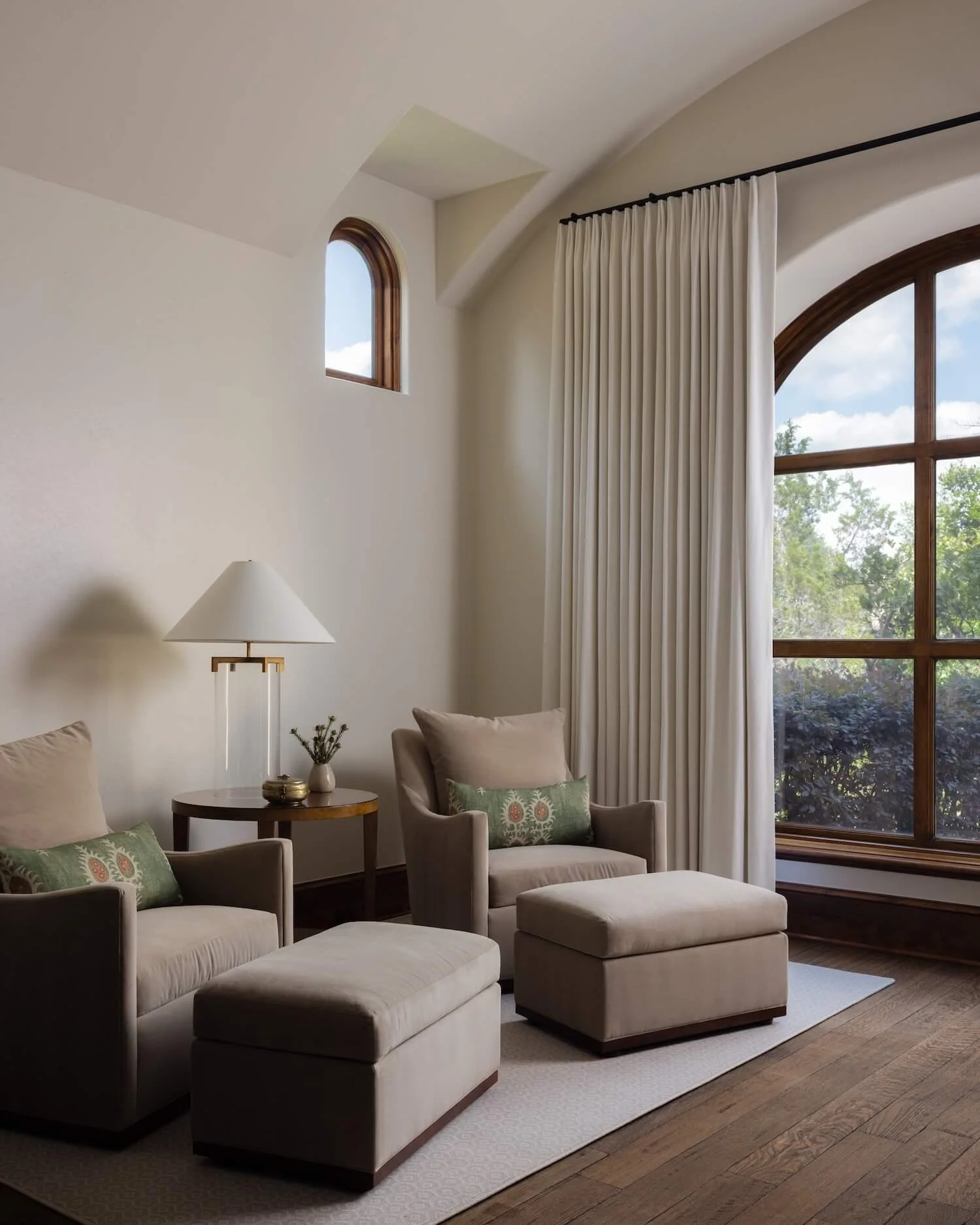
Sheer curtains allow diffused light to pass through while maintaining privacy. Hang them 12” above the window frame and extend the rod beyond the window frame on each side so the fabric falls completely off the glass when open.
Roller and Roman blinds in light fabrics stack neatly above the window when raised, exposing the full pane. Top-down, bottom-up shades offer an excellent balance of light and privacy, allowing you to lower the shade from the top while keeping the lower portion closed for street-level privacy.
If you are working with a designer on furnishings or custom window treatments, ask specifically about fabric opacity and light reflectance so your selections support your overall natural light goals.
Arrange Furniture to Let Light Flow
Furniture placement has a bigger impact on natural light than most homeowners realize. Large, dark pieces positioned directly in front of or beside windows block light before it has a chance to travel into the room.
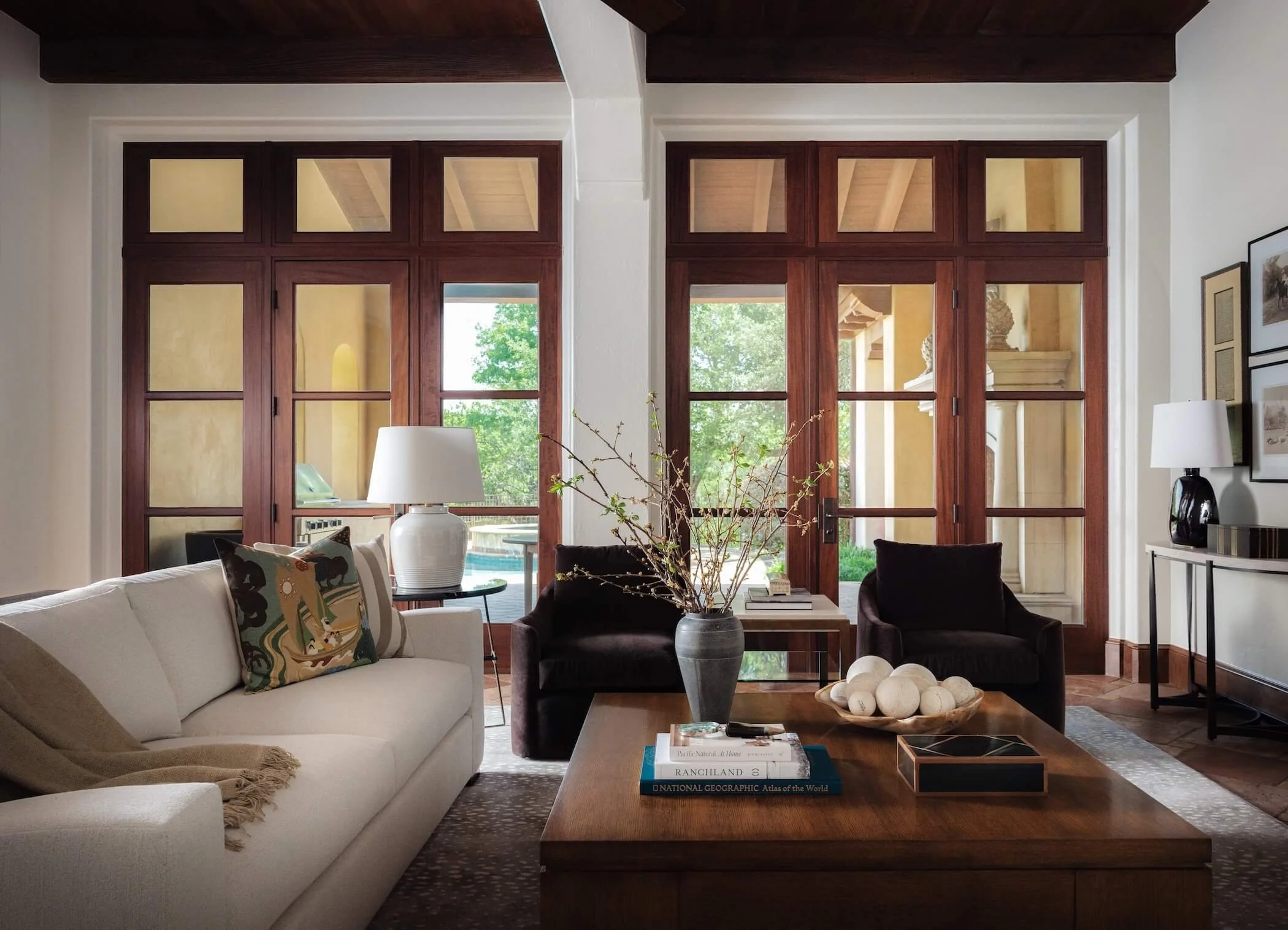
Keep the area immediately surrounding windows clear. Opt for lower-profile furniture near the glass and reserve taller pieces for interior walls. Glass-topped coffee tables and transparent side tables allow light to pass through rather than absorb it, keeping the room open and bright.
In open-plan spaces, use rugs, lighting, and furniture groupings to define zones without adding walls. Every wall you remove or avoid is a light barrier eliminated. This is one of the reasons open floor plans remain a consistent preference among homeowners building in the Austin area, where connecting indoor and outdoor living is a design priority.
Natural Light Tips by Strategy
The table below compares common strategies for enhancing natural light so you can quickly identify what fits your budget and situation.
| Strategy | Light Impact | Effort | Best For |
|---|---|---|---|
| Strategic mirror placement | High | DIY | Dark corners, hallways, small rooms |
| Light-coloured paint & finishes | Medium–High | DIY | Any room, especially north-facing |
| Sheer curtains or blinds | Medium | DIY | Bedrooms and living rooms needing privacy |
| Furniture rearrangement | Medium | DIY | Any room with windows blocked by furniture |
| Gloss or reflective flooring | Medium | Moderate | Open-plan spaces and kitchens |
| Internal glazed partitions | High | Moderate | Dividing spaces without blocking light |
| Solar tube installation | High | Moderate | Windowless bathrooms and corridors |
| Skylight or roof lantern | Very High | Major Works | Extensions and deep floor plans |
| Window enlargement | Very High | Major Works | Dark south or west-facing rooms |
| Open plan conversion | Transformative | Major Works | Compartmentalised older homes |
Light Considerations for New Builds and Renovations
If you are planning a custom home build in Lakeway, Driftwood or the surrounding Austin area, natural light should be part of the conversation from day one. Decisions about window size and placement, ceiling height, roof pitch, and floor plan layout all directly affect how much daylight your home receives and how well it moves through the space.
The same is true for renovations. Removing a wall, adding a skylight, or replacing a solid exterior door with a glass-paneled one can fundamentally change how a room feels. These are not afterthoughts. They are structural decisions that are far easier and more cost-effective to address during the design and build phase than after construction is complete.
Working with a designer who prioritizes bright home design from the start means your home is planned around light, not retrofitted for it later.
Small Changes, Big Difference
Not every natural light improvement requires construction. Some of the most effective changes cost very little. Swapping out dark curtains for sheers, repositioning a mirror, repainting a ceiling in a brighter white, or clearing overgrown shrubs from outside a window can each meaningfully improve the feel of a room.
The key is to approach your home systematically. Walk through each room at different times of day. Note where light enters, where it stops, and what is blocking it. That observation is the starting point for every good light-filled interiors project.
Ready to Bring More Light Into Your Home?
Whether you are exploring furnishings, planning a renovation, or starting a custom home build in the Austin area, the team at Wendi Gee Interiors approaches every project with natural light as a foundational design priority. Serving Lakeway, Driftwood, and surrounding communities, we help homeowners create spaces that feel as good as they look.
Get in touch to start the conversation.
FAQ,s
-
The fastest wins for enhancing natural light do not require construction. Start with your walls. Light, warm whites and soft creams reflect sunlight rather than absorbing it, which instantly brightens a space. Next, look at your windows. Heavy drapes bunched over the glass block far more light than most people realize. Swapping them for sheer panels or linen blinds that stack above the frame makes an immediate difference.
Mirrors are another high-impact, low-effort tool. A large mirror placed on the wall opposite or perpendicular to a window effectively doubles the light in the room by bouncing it back into the space. Glossy surfaces, pale flooring, and metallic fixtures all play a similar supporting role.
-
Small windows are one of the most common challenges in older homes, especially across the Austin area where craftsman bungalows and traditional builds are popular. A few strategies make a big impact here. Hang curtain rods as close to the ceiling as possible and extend them well beyond the window frame on both sides. This frames the window generously and makes it read much larger when the curtains are open.
Inside the window itself, use a top-down shade so you can lower it from above for privacy while still letting light in from the upper half. For a more permanent solution, our renovation team can assess whether window enlargement or an added transom above the existing frame is a good fit for your home.
-
Maximizing natural light is about removing obstacles and amplifying what you already have.
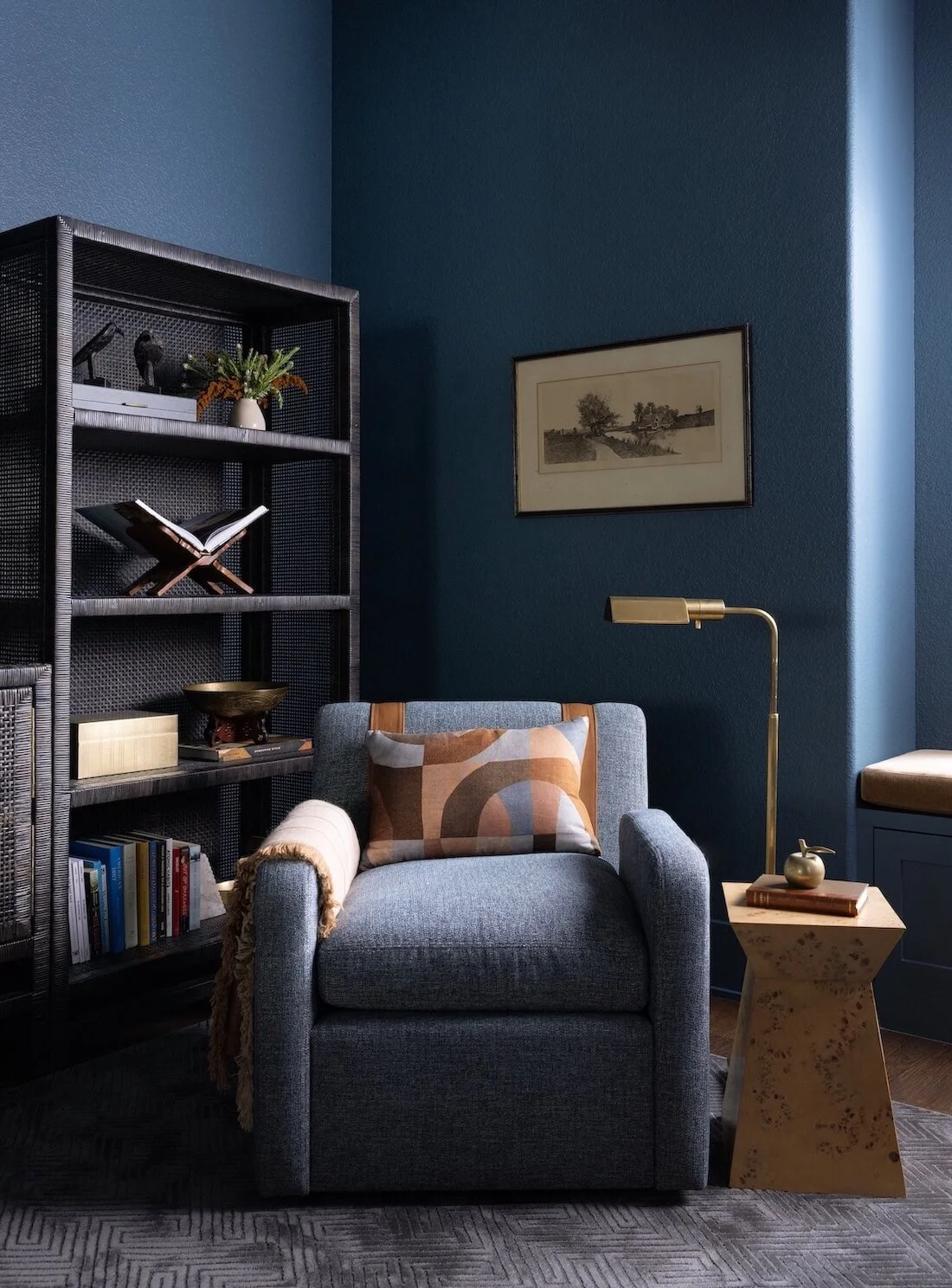
Keep windows clear. Pull furniture away from window walls. Avoid tall, dark bookshelves flanking the glass. The path between the window and the rest of the room should be as open as possible.
Go lighter on every surface. Pale walls, ceilings, and floors work together to pass light from one plane to the next.
Think about the exterior too. Overgrown shrubs, covered porches, and dark exterior paint all reduce how much light reaches your windows in the first place.For homeowners considering a custom home build in Lakeway, Driftwood, or Byker Woods, this is the moment to think about orientation. South-facing living spaces receive the most consistent sunlight throughout the day. Building light into the plan from the start is far easier than correcting it after.
-
Low-light living rooms require a slightly different decorating approach. The instinct is often to go very white, but a warm off-white or soft greige tends to work better because it reads as intentional rather than clinical. Introduce warmth through natural textures: linen, rattan, light oak, and natural stone all carry a coziness that makes a room feel inviting rather than dim.
Our furnishings service helps homeowners in Lakeway, Driftwood, Biker Woods, and across the greater Austin area select pieces specifically chosen to work with their home's light conditions. The right sofa fabric, rug tone, and wood finish can make a meaningful difference in how bright a room feels day to day.
Keep window treatments simple and light. Avoid anything that adds visual weight near the glass. Glass-topped side tables and lucite pieces are practical choices that keep the room feeling open without sacrificing style.
-
The biggest transformations usually come from combining several strategies at once rather than any single change. A room that gets new light paint, updated window treatments, a repositioned sofa, and a large mirror can look like an entirely different space without a single structural change.
For more significant projects in the Austin area, our renovation services cover everything from opening up floor plans to adding skylights and enlarging windows. If you are thinking about a bigger project in Lakeway, Driftwood, Biker Woods, or the surrounding Hill Country, we would love to talk through the options with you. Reach out to schedule a consultation.

Ready for a Light-Filled Home?
Book a free consultation with our design team to explore the best natural light strategies for your space.