After more than 100 residential projects across Austin, Westlake, Tarrytown, Driftwood, Dripping Springs, and Lakeway, I have heard the same thing from clients more times than I can count.
"Everything is nice but something feels off. It does not feel like us. It feels unfinished."
This is one of the most common experiences homeowners have, especially after a remodel or moving into a new build. The finishes are good. The furniture is good. But the room feels flat, cold, or somehow incomplete. Here is what is actually going on and how to fix it.
The Real Reason Your Home Feels Unfinished
When a home feels unfinished, the instinct is usually to buy more things. Another lamp, more throw pillows, a piece of art. Sometimes that helps. More often it just adds clutter without addressing the real problem.
In my experience, a home feels unfinished for one of seven reasons. Sometimes several at once. Identifying which ones apply to your specific space is the first step to actually fixing it.
7 Reasons Your Austin Home Feels Unfinished and What to Do About Each
1. The Lighting Is Flat
This is the single most common reason a home feels cold and incomplete, and it is the most underestimated. Most new builds and remodels in Austin rely almost entirely on recessed downlighting. Downlights are practical and they are fine as ambient light. But a room lit only from above feels like a supermarket. There is no warmth, no atmosphere, no sense that the room changes throughout the day.
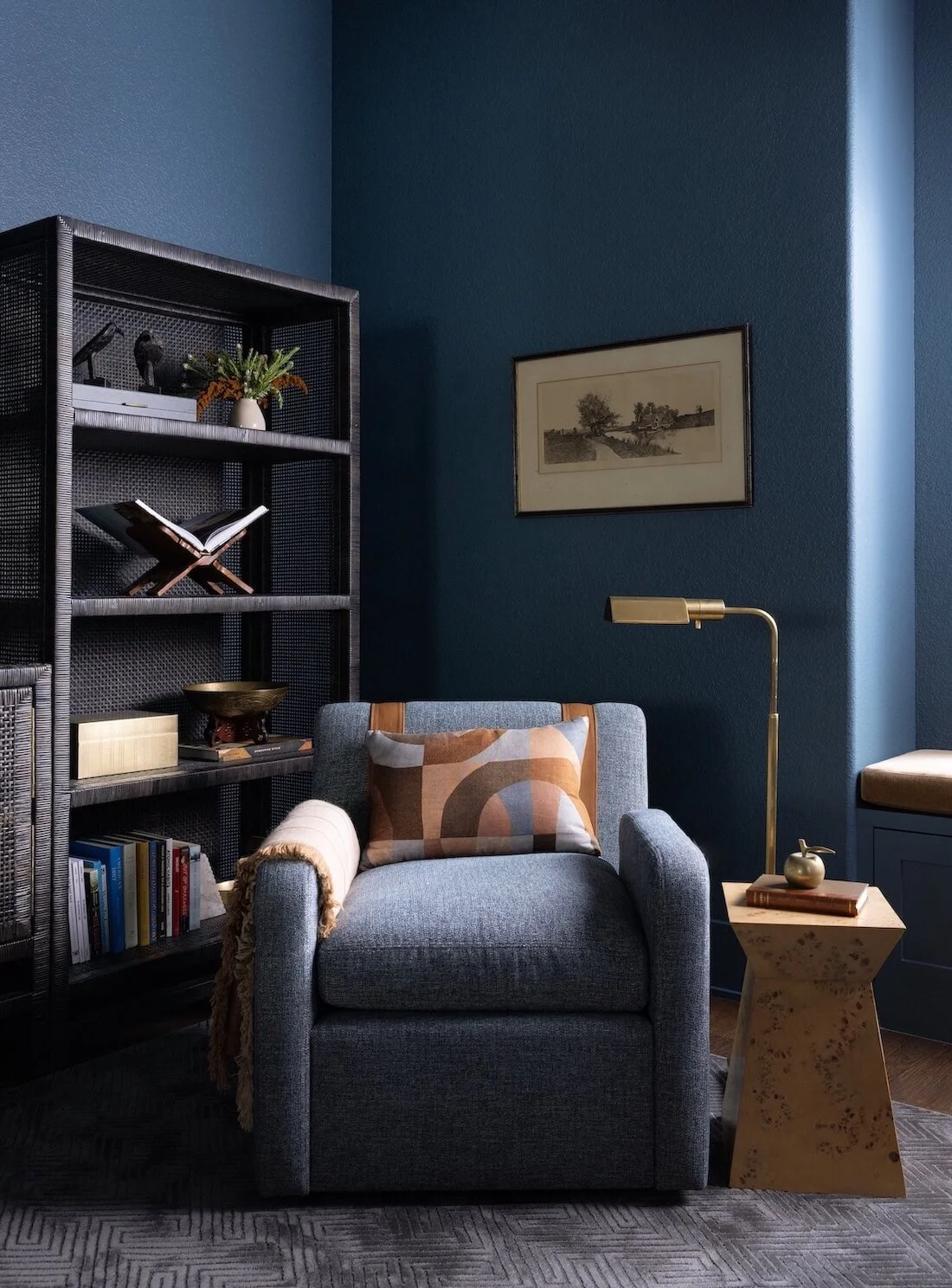
The fix is to layer your lighting. Every room needs three types: ambient light from above, task lighting at a functional level, and accent lighting that creates warmth and draws the eye to specific elements. A floor lamp beside a sofa, a table lamp on a console, a picture light above a piece of art. These additions cost relatively little and transform how a room feels in the evening.
In Westlake and Driftwood homes where the architecture is often striking and contemporary, this layering is what separates a home that looks beautiful in photographs from one that feels beautiful to live in.
2. There Is No Rug, or the Rug Is Too Small
A rug is the foundation of a room. It defines the space, anchors the furniture, and adds the warmth and texture that hard floors alone cannot provide. Without a rug, furniture floats. With a rug that is too small, it still floats because the furniture legs are sitting outside it rather than on it.
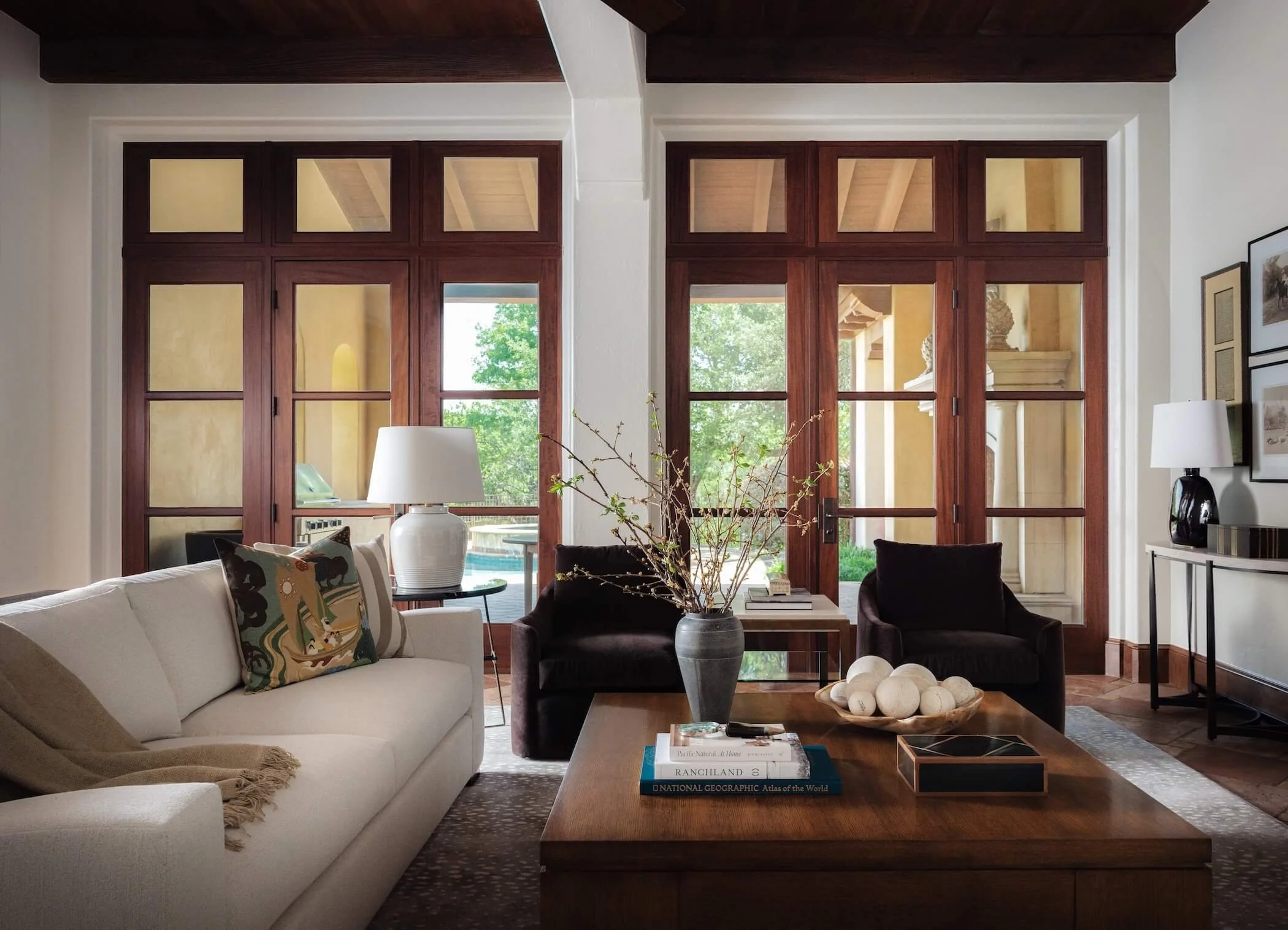
The rule I follow is that a rug should be large enough for at least the front legs of every piece of seating to sit on it. In a living room, that typically means an 8 by 10 at minimum, and often larger. In dining rooms, the rug should extend at least 24 inches beyond the table on all sides so chairs remain on the rug when pulled out.
For clients in Austin who want to add warmth and character quickly, I almost always start with a vintage or antique rug. A hand-knotted Persian or Turkish rug adds history, texture, and a quality that new rugs simply cannot replicate, and it often becomes the piece that makes everything else in the room feel more considered.
3. The Walls Are Empty or Underworked
Bare walls are one of the fastest ways to make a home feel temporary and unfinished. Art does not have to be expensive to be effective. What matters is that it is intentional and that it is hung correctly.
The most common mistake I see is art hung too high. The centre of a piece should sit at approximately eye level, which for most people is around 57 to 60 inches from the floor. When art is hung too high, it disconnects from the furniture below it and the room feels off without people always knowing why.
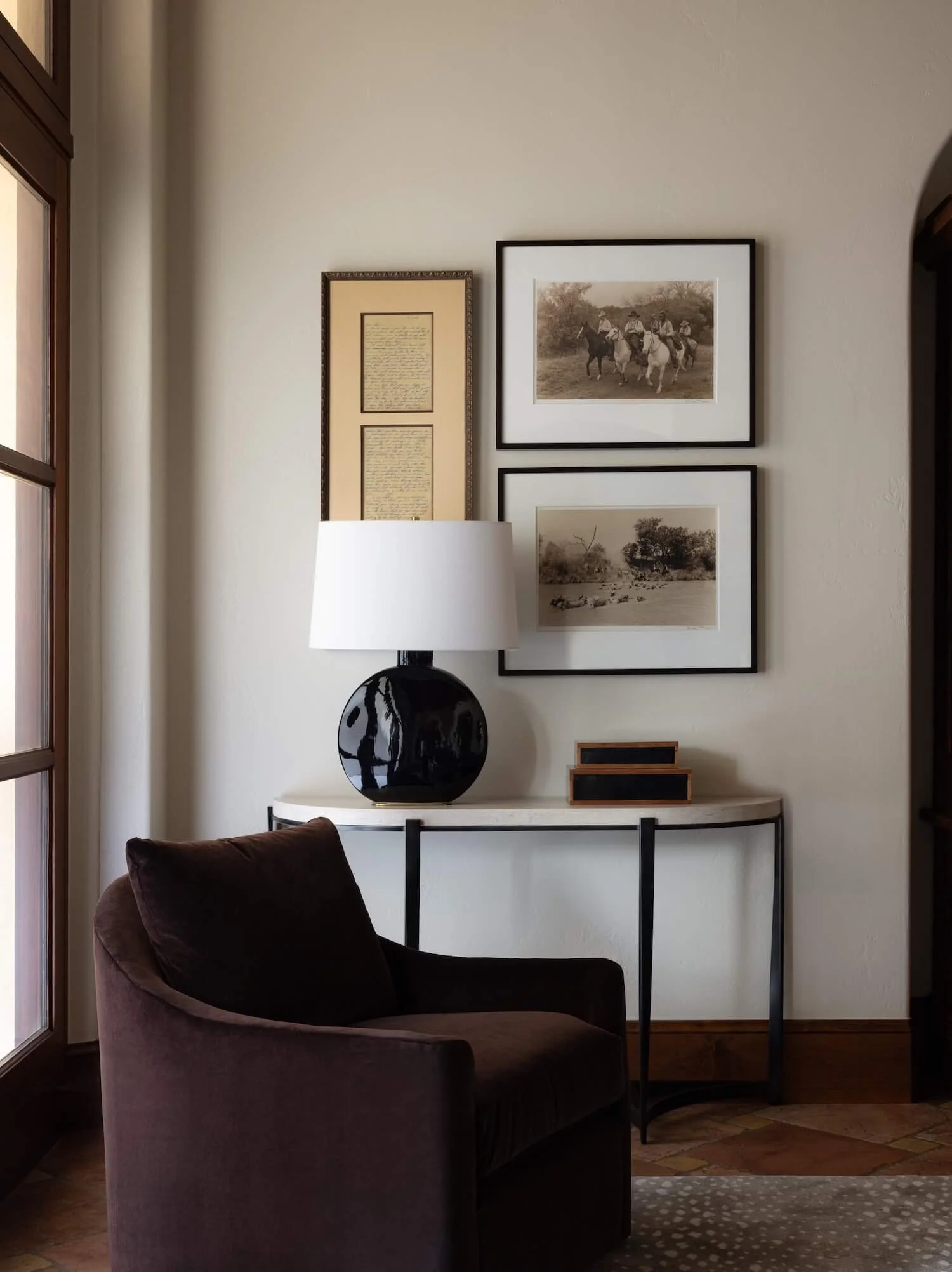
Beyond individual pieces, consider creating a gallery wall in a hallway or staircase, using large-format art to anchor a primary wall, or mixing art with mirrors and wall sconces to create a layered, considered feel. In Tarrytown homes with older architectural bones, the right art can bring a room entirely to life.
4. There Is No Texture
Rooms that feel cold almost always lack texture. When every surface is smooth, hard, and reflective, the space feels clinical rather than inviting. Adding texture is one of the most powerful and underused tools in residential interior design.
Texture comes from fabric, from natural materials, from the difference between a smooth linen sofa and a rough-hewn wooden coffee table. It comes from a chunky knit throw, a woven rattan pendant, a rough-textured ceramic lamp base beside a smooth marble table. The contrast between textures is what creates depth and visual interest.
At Wendi Gee Interiors, we work with three textures in every room: one smooth, one woven or tactile, and one rough or organic. That combination is almost always enough to make a space feel layered and complete.
5. The Room Has No Focal Point
Every room needs something for the eye to land on first. A focal point gives a room a sense of intention and direction. Without one, the eye wanders without purpose and the room feels restless and unresolved.
In a living room, the focal point is often a fireplace, a large piece of art, or a statement sofa. In a bedroom, it is usually the headboard wall. In a dining room, it is the light fixture above the table. Whatever it is, the rest of the room should orient itself toward it rather than competing with it.
If your room does not have a natural focal point, you can create one. A large mirror on a wall, a dramatic light fixture, an oversized piece of art, or even a beautifully styled console table with a lamp and objects can anchor a space and give it the sense of resolution it is missing.
6. The Furniture Is Good but Not Personal
One of the things I say to clients most often is that a home should look like it belongs to the people who live in it, not like a showroom. Furniture alone, however well chosen, cannot achieve that. Personal objects do.
The homes that feel most alive and complete have things with stories. A piece of art bought on a trip. A book collection that reflects real reading. Objects collected over years that mean something to the people in the room. These are the things that turn a well-furnished space into a home.
This does not mean cluttering surfaces with possessions. It means editing deliberately to keep the things that are meaningful and removing the things that are not. A shelf styled with five objects that matter is always more powerful than the same shelf crowded with twenty things that do not.
7. The Scale Is Wrong
Scale is the most technical of the seven problems but also one of the most impactful. When furniture is too small for a room, it looks timid and the room feels unfinished. When it is too large, it feels cramped and oppressive.
In the open-plan living spaces common in Austin custom homes, the most common mistake is choosing furniture that is too small. A sofa that would look generous in a smaller space can disappear in a 25-foot-wide open-plan room. A coffee table that was the right size in a previous home can look like a footstool in a new one.
The rule I use is to start with the largest piece in the room and work outward. Get the scale of the anchor piece right and everything else becomes easier to calibrate.
When to Call a Designer
Most of the fixes above are things you can do yourself with time and a good eye. But if you have tried several of them and the room still feels off, or if you are moving into a new home and want to get it right from the start, that is when a designer makes the most sense.
What a good designer brings is not just taste. It is the ability to look at a room and diagnose exactly what is wrong, in the order that matters, and to source the specific pieces that will fix it without waste. At Wendi Gee Interiors, we work on furnishings projects across Austin, Westlake, Tarrytown, Driftwood, Dripping Springs, and Lakeway. If your home feels unfinished and you want help diagnosing and fixing it, we would love to talk.
Does your Austin home feel unfinished?
Schedule a free discovery call with Wendi Gee Interiors today.