What Is Transitional Interior Design? A Guide for Austin Homeowners
Transitional interior design is the aesthetic I have built my entire practice around. After 100 plus residential projects across Austin, Westlake, Tarrytown, Driftwood, Dripping Springs, and Lakeway, I know exactly what this style is, why it works so well in Austin homes, and what it takes to get it right.
If you love interiors that feel warm and collected but also clean and modern. If you are drawn to spaces that blend old and new without feeling dated or clinical. If you want a home that feels timeless rather than trend-driven. Transitional design is almost certainly what you are looking for.
What Transitional Interior Design Actually Means
Transitional design sits between traditional and contemporary. It borrows the warmth, detail, and sense of history from traditional interiors and the clean lines, simplicity, and restraint from contemporary design. The result is a style that feels neither old-fashioned nor cold, neither ornate nor sterile.
The defining quality of transitional design is that it is livable. It does not demand perfection. It does not require you to edit your life to fit the aesthetic. It embraces natural materials that age beautifully, furniture that feels comfortable as well as beautiful, and objects that have meaning rather than just visual impact.
In my work at Wendi Gee Interiors, transitional design means blending pieces from different eras, mixing antiques with contemporary furniture, and choosing materials that feel rooted in the landscape rather than imported from a trend. It means warm neutral palettes rather than gray or stark white. And it means interiors that feel collected over time rather than purchased in a single afternoon.
Why Transitional Design Works So Well in Austin
Austin is a city with a genuinely unique design landscape. The Hill Country setting, the warm intense light, the mix of historic neighborhoods like Tarrytown and contemporary new builds in Driftwood and Dripping Springs, and a homeowner community that has often travelled widely and has strong aesthetic preferences, all of these things make transitional design a natural fit.
The warm Texas light responds beautifully to the warm neutral palette that defines transitional interiors. Gray, which dominated residential design for a decade, looks flat and cold in intense Texas light. Warm clay, honey, and ocher come alive.
The Texas landscape, particularly the Hill Country, naturally suggests materials like limestone, cedar, and aged bronze. These are transitional materials. They feel historic and grounded rather than slick and contemporary, which is exactly the quality transitional design is built around.
And the architecture of Austin homes, from the older bones of Tarrytown bungalows to the soaring open-plan volumes of Westlake custom builds, benefits from the balance transitional design brings. Traditional architectural detail looks more contemporary when paired with clean-lined modern furniture. Contemporary architecture feels warmer and more personal when layered with antiques, vintage rugs, and natural materials.
The 8 Elements That Define Transitional Interior Design
1. A Warm Neutral Palette
Transitional interiors use warm neutrals rather than cool ones. Clay, warm taupe, ocher, honey, soft ivory, and warm off-white. These colors feel grounded, lived-in, and timeless. They also perform exceptionally well in the Austin light, deepening rather than flattening as the day progresses.
2. Clean Lines With Soft Details
Transitional furniture has cleaner lines than traditional furniture but more warmth and detail than strictly contemporary pieces. A sofa with a simple, tight back and gently curved arms. A dining table with tapered legs and a slightly textured surface. A bed frame with a classic upholstered headboard in a simple shape. The lines are restrained but never cold.
3. Natural Materials
Transitional design relies heavily on natural materials. In Austin and the Hill Country, this means Texas limestone on floors and walls, reclaimed cedar on beams and mantels, warm-toned quartzite on countertops, and unlacquered brass on hardware and fixtures. These materials age beautifully and feel deeply connected to the landscape.
4. Antique and Vintage Pieces Mixed With Contemporary Furniture
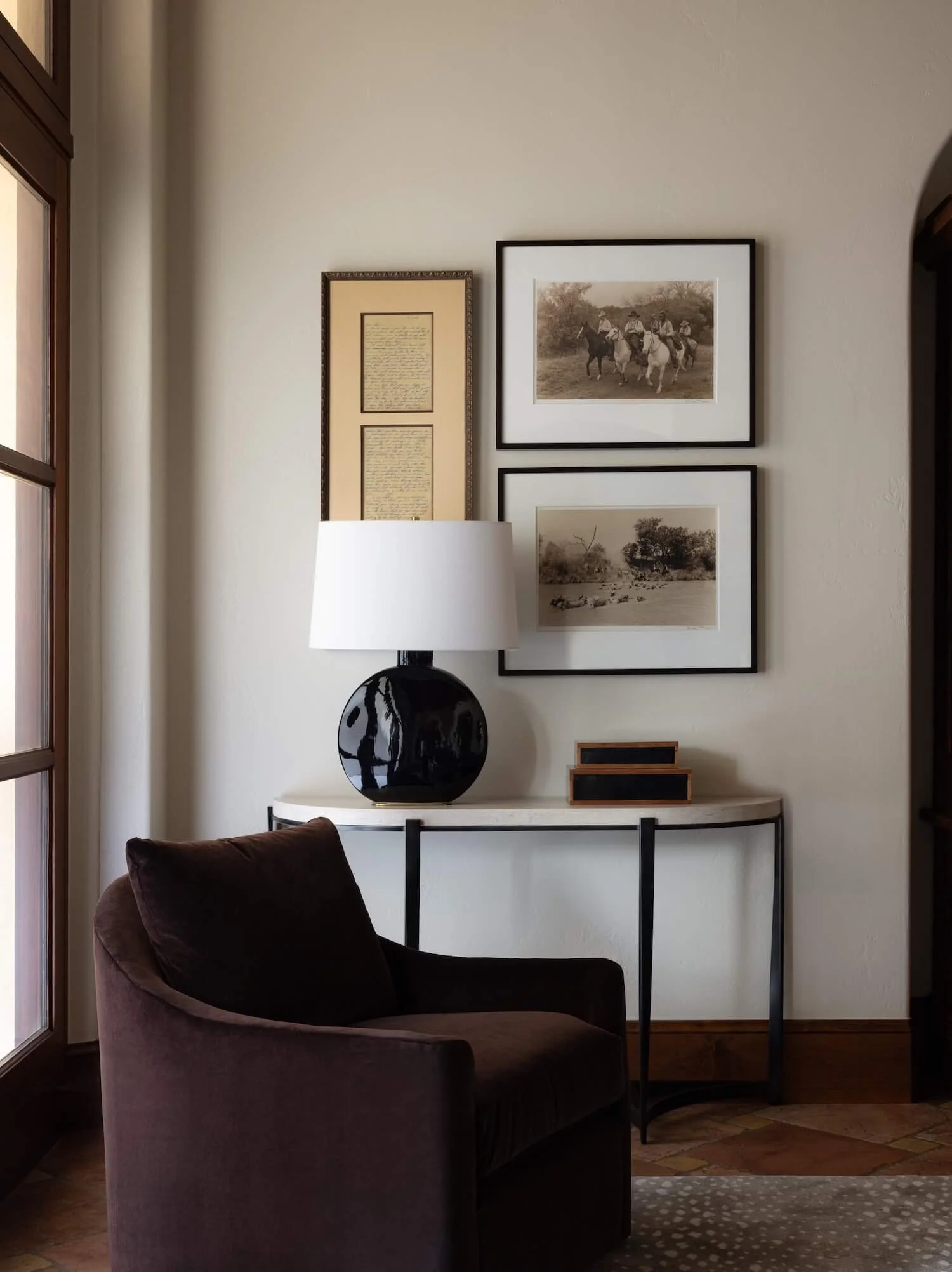
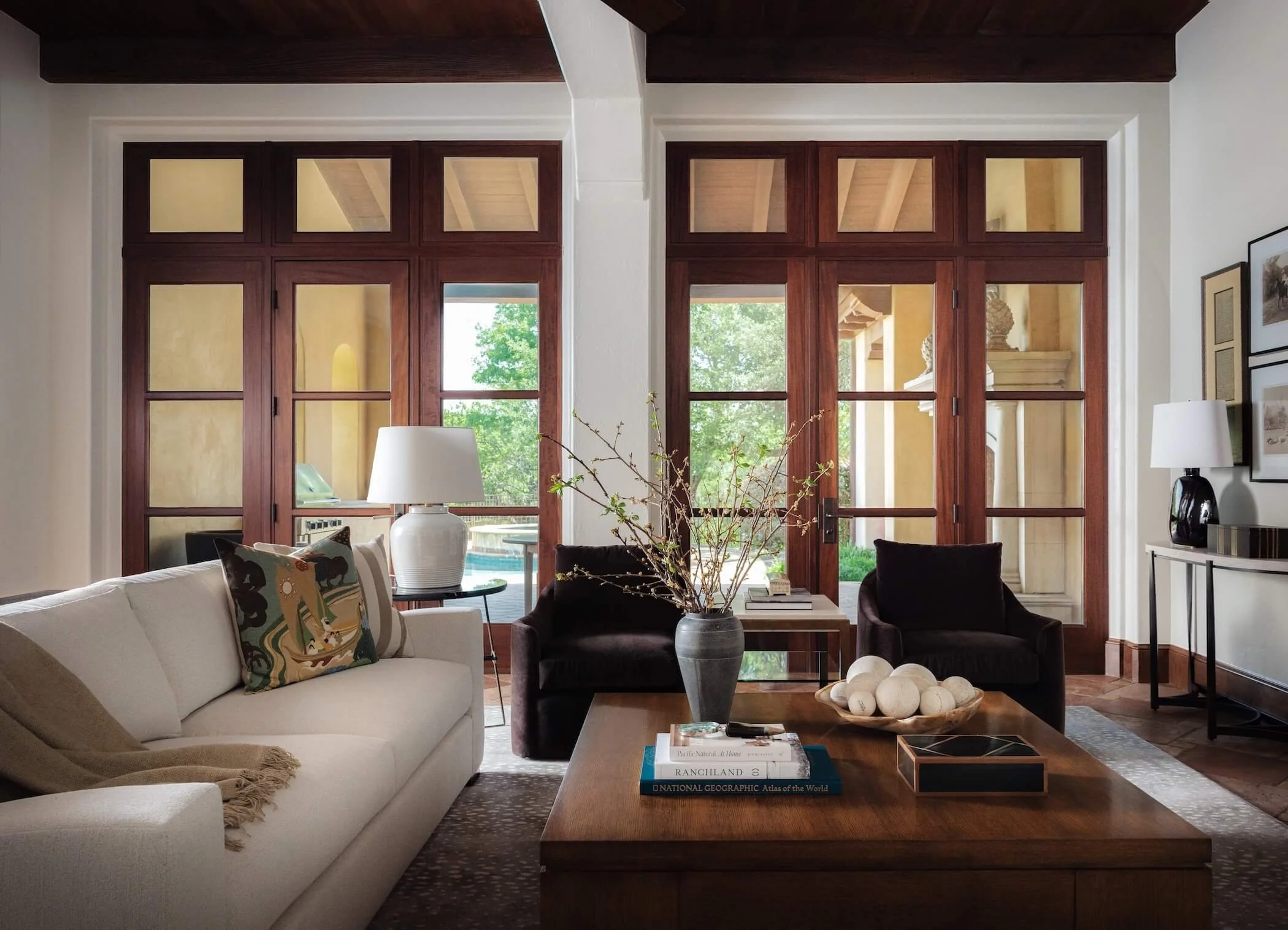
This is the element that most defines my work at Wendi Gee Interiors. A transitional room is never furnished entirely from one era. A contemporary sofa sits beside an antique side table. A hand-knotted Persian rug anchors a room of clean-lined modern furniture. A vintage mirror hangs above a contemporary console. The old and the new define each other and the result is a room that feels collected and personal.
5. Layered Textures
Transitional interiors are rich in texture. Linen against stone. Reclaimed wood alongside plaster. Hand-knotted wool on hardwood floors. Aged brass beside warm quartzite. The contrast between textures is what creates the depth and warmth that make transitional rooms feel so livable.
6. Restrained Color Used With Confidence
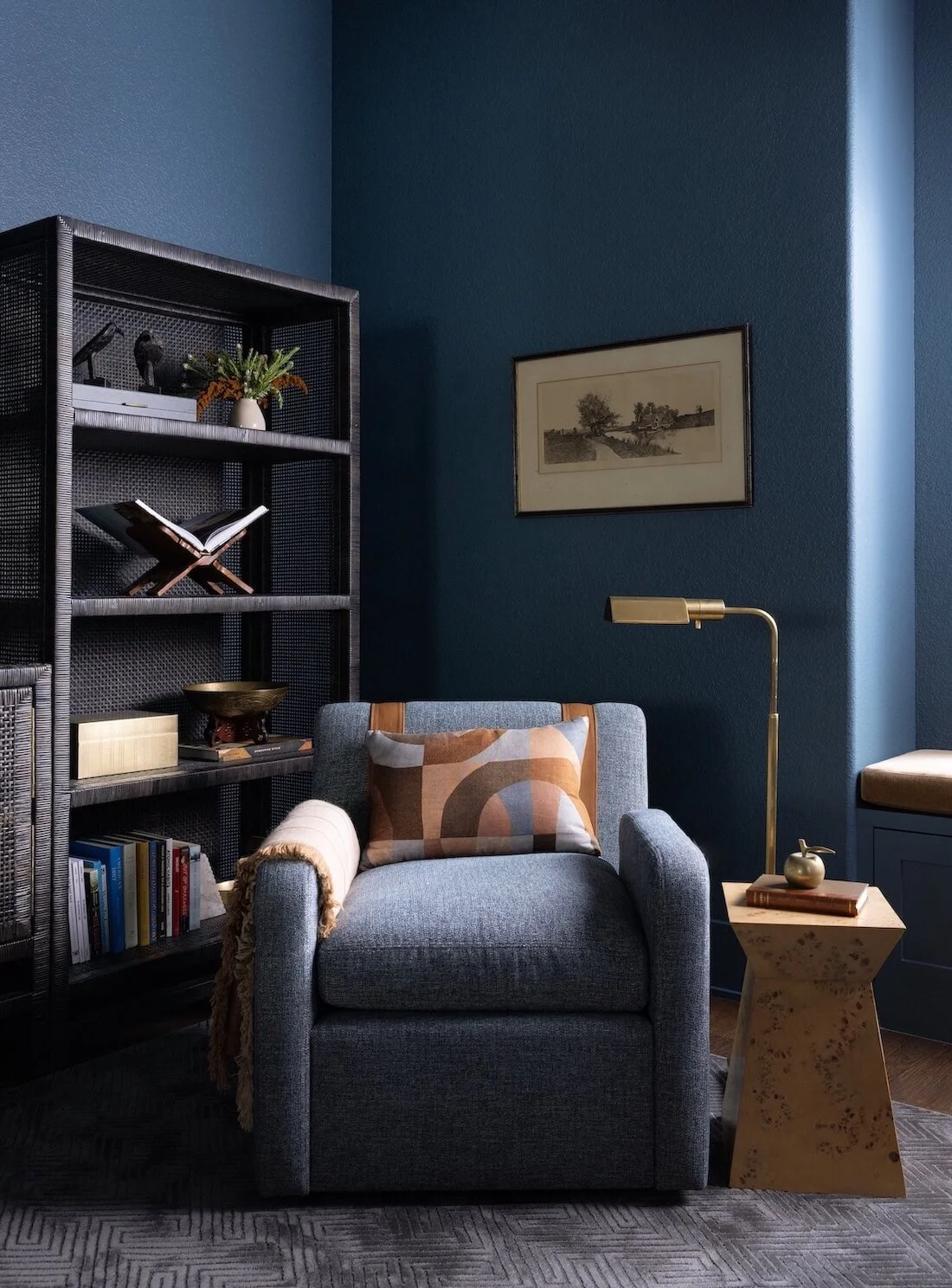
Transitional design uses color selectively and deliberately. A deep jewel-toned velvet sofa in a room of warm neutrals. A single wall in a rich, saturated color in an otherwise restrained palette. Deep olive drapery in a room of ivory and warm wood. The color is never timid but it is always edited.
7. Considered Lighting
Lighting in transitional interiors is always layered and always intentional. A statement pendant or chandelier as the primary fixture, wall sconces for warmth, table lamps for intimacy, and accent lighting to highlight architectural features and art. Transitional lighting fixtures often mix traditional forms with contemporary materials. A classic lantern shape in unlacquered brass. A simple drum shade in aged nickel.
8. Timeless Over Trendy
The defining characteristic of the best transitional interiors is that they are genuinely hard to date. You cannot look at them and say with certainty when they were designed. That timelessness comes from prioritising quality and meaning over what is currently fashionable, and from choosing pieces that will look as right in fifteen years as they do today.
Is Transitional Design Right for Your Austin Home?
Transitional design is right for you if you find yourself drawn to spaces that feel warm and personal but also clean and ordered. If you love the idea of mixing an antique rug with a contemporary sofa. If you want your home to feel lived-in and collected rather than showroom-fresh. And if you want interiors that will look as right in fifteen years as they do today.
It is the style I have built my entire practice around because I genuinely believe it produces the most livable, most personal, and most timeless homes. And in Austin and the Hill Country, with the warm light, the beautiful landscape, and the rich mix of old and new architecture, it is a style that feels completely at home.
If you are looking for a transitional interior designer in Austin, Westlake, Tarrytown, Driftwood, Dripping Springs, or Lakeway, I would love to talk about your project.
Ready to create a transitional home in Austin that feels completely yours?
Schedule a free discovery call with Wendi Gee Interiors today.